Understanding ERP software costs and implementation investments for manufacturing businesses in India.
Manufacturing companies across India are increasingly investing in Enterprise Resource Planning (ERP) solutions to streamline production, inventory management, procurement, finance, quality control, and supply chain operations. However, one of the most common questions business owners ask before implementation is: How much does ERP software cost in India for manufacturing companies?
The answer depends on several factors, including company size, deployment model, customization requirements, number of users, implementation complexity, and ongoing support needs. While some small manufacturers can deploy ERP systems for a few lakhs, large enterprises may spend significantly more on comprehensive solutions.
This guide explores ERP pricing in detail, helping manufacturing businesses understand cost structures, budgeting considerations, and factors that influence ERP investments.
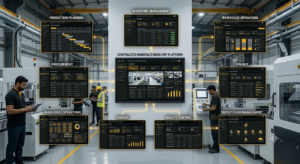
ERP software integrates every major manufacturing function into a unified business platform. ERP software serves as a centralized platform that integrates various business functions into a single system. For manufacturers, ERP solutions help manage production planning, inventory control, procurement, warehouse operations, quality assurance, sales, accounting (financial accounting), human resources, and customer relationship management.
Unlike generic business software, manufacturing ERP systems are specifically designed to handle complex production workflows and supply chain requirements. These solutions provide real-time visibility into operations, enabling businesses to improve efficiency and reduce operational costs.
Manufacturing ERP systems typically include:
As manufacturing operations become increasingly digital, ERP software has evolved from being a luxury investment to a strategic necessity. Organizations implementing ERP solutions often achieve better resource utilization, reduced inventory carrying costs, improved production planning accuracy, and stronger decision-making capabilities.
The total ERP investment, however, depends heavily on the scope of implementation and business requirements.
ERP pricing varies considerably based on business size and operational complexity. Small manufacturers typically spend less than medium-sized or enterprise-level organizations due to fewer users and simpler workflows.
Below is a general cost range for ERP implementation in India:
| Company Size | Estimated ERP Cost |
| Small Manufacturing Business | ₹1 lakh – ₹10 lakh |
| Medium Manufacturing Company | ₹10 lakh – ₹50 lakh |
| Large Manufacturing Enterprise | ₹50 lakh – ₹5 crore+ |
These estimates generally include:
However, extensive customization, advanced integrations, and additional modules can significantly increase the final investment.
Manufacturers should view ERP implementation as a long-term strategic investment rather than a one-time software purchase. The overall return often comes from operational efficiencies, improved inventory management, reduced waste, and enhanced production visibility.
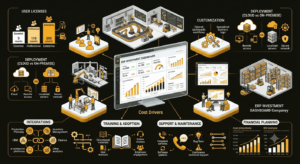
Multiple business and technical factors influence the total ERP investment for manufacturers.
Several variables affect ERP software costs for manufacturing organizations. Understanding these factors helps businesses estimate budgets more accurately.
Most ERP vendors charge based on user licenses. The greater the number of employees requiring access, the higher the licensing cost.
Examples include:
Organizations should carefully determine which employees need full access versus limited or departmental access to optimize licensing expenses.
ERP deployment models significantly affect total cost.
Cloud ERP
On-Premise ERP
Many Indian manufacturers are shifting toward cloud ERP because of its scalability and predictable monthly costs.
ERP costs increase as more modules are added.
Common manufacturing modules include:
Companies should prioritize modules based on immediate business needs and expand gradually when appropriate.
ERP vendors typically offer different licensing structures. Understanding these models is essential when evaluating proposals.
Under perpetual licensing, organizations purchase the software outright and own the license permanently.
Characteristics include:
Manufacturing businesses choosing perpetual licenses often make larger initial investments but may reduce recurring subscription costs over time.
Cloud ERP providers usually follow a subscription model.
Benefits include:
This model is particularly attractive for small and medium-sized manufacturers seeking predictable operating expenses.
Some ERP systems charge according to the number of active users.
Typical pricing factors include:
Manufacturers should review licensing structures carefully to avoid paying for unnecessary access levels.
One of the biggest misconceptions is that ERP pricing only involves software costs. In reality, ERP implementation often represents a substantial portion of total investment.
Implementation expenses commonly include:
For many manufacturing companies, implementation costs can range from 50% to 150% of the software licensing fee.
Complex manufacturing environments often require detailed process mapping across procurement, production, inventory, and distribution functions. These requirements increase consulting hours and implementation expenses.
Businesses should request detailed implementation breakdowns from ERP vendors to understand exactly what is included in the proposal.
Manufacturing companies often have unique operational processes that standard ERP systems cannot fully accommodate without modifications.
Customization may involve:
While customization improves usability and alignment with business processes, it can substantially increase project costs.
Potential customization expenses include:
Organizations should carefully evaluate whether customization is genuinely necessary or if existing ERP functionality can meet business objectives through process adjustments.
Excessive customization often leads to higher long-term ownership costs and implementation delays.
Data migration is a critical component of ERP implementation, especially for manufacturers transitioning from spreadsheets, legacy software, or multiple disconnected systems.
Migration activities may include:
The complexity of migration depends largely on data quality and system architecture. Learn more about data migration processes in enterprise systems.
Integration costs may also arise when connecting ERP software with:
The number of integrations directly impacts project complexity and cost. Manufacturing businesses should account for these expenses early during ERP budgeting discussions.
Even the most advanced ERP solution delivers limited value if employees are not properly trained. User adoption plays a major role in ERP success.
Training expenses may cover:
Many ERP vendors offer different support packages, including:
Support agreements typically represent an ongoing operational expense that businesses must include in long-term ERP budgeting.
One of the most important decisions manufacturing companies face when selecting an ERP system is choosing between cloud-based and on-premise deployment. Both options have distinct cost structures, advantages, and long-term financial implications.
Cloud ERP solutions typically operate on a subscription model. Businesses pay monthly or annual fees based on users, modules, and storage requirements.
Advantages include:
Typical cloud ERP expenses may include:
For many small and medium manufacturing companies, cloud ERP provides a lower barrier to entry while offering predictable operational expenses.
On-premise ERP systems require businesses to purchase software licenses and host the solution internally.
Additional expenses often include:
While upfront costs are significantly higher, some large manufacturers prefer on-premise ERP because it offers greater control over data, infrastructure, and customization.
The right choice depends on organizational goals, compliance requirements, available IT resources, and long-term growth plans.
Many ERP projects exceed their original budgets because organizations focus only on software pricing and ignore indirect expenses.
Understanding hidden costs helps create a more realistic implementation budget.
ERP implementation requires participation from multiple departments.
Employees may spend significant time on:
These activities can temporarily reduce productivity and create indirect costs.
Manufacturing companies frequently need to redesign existing workflows to align with ERP best practices.
Potential costs include:
During implementation and go-live phases, temporary disruptions may occur.
Examples include:
Organizations should build contingency budgets to manage unexpected challenges during deployment.
Recognizing these hidden expenses early improves project planning and reduces financial surprises.
ERP pricing often varies depending on the manufacturing sector because each industry has unique operational requirements.
Automotive companies typically require advanced ERP functionality for:
As a result, ERP implementations tend to be more complex and costly.
Food manufacturers often need:
These specialized capabilities can increase implementation expenses.
Pharmaceutical ERP projects frequently involve:
Due to stringent industry regulations, implementation costs are often higher.
Textile manufacturers commonly require:
While implementations may be less complex than pharmaceutical projects, customization can still affect pricing.
Industry-specific requirements play a major role in determining total ERP investment and implementation effort.
ERP projects can represent a substantial investment, but manufacturers can take several steps to control costs without sacrificing functionality.
Rather than implementing every available module immediately, businesses can begin with essential functions such as:
Additional modules can be added later as business needs evolve.
Many ERP systems already include industry best practices.
Companies should:
This approach lowers both implementation and maintenance costs.
Poor-quality data increases migration effort and consulting hours.
Best practices include:
A skilled ERP partner can reduce delays, avoid common mistakes, and improve project efficiency.
Choosing based solely on the lowest proposal often leads to higher costs later due to implementation issues or insufficient support.

ERP systems help manufacturers improve efficiency, reduce costs, and strengthen decision-making.
Manufacturing companies should evaluate ERP software as a strategic investment rather than simply an operational expense.
ROI can be measured through several performance improvements.
ERP systems improve visibility into stock levels and demand forecasts.
Potential benefits include:
Manufacturers often experience gains through:
Automation reduces manual tasks and administrative workload.
Examples include:
Real-time analytics provide management with greater visibility into:
Many manufacturing organizations recover their ERP investment within several years through efficiency improvements and operational savings.
Selecting the right ERP vendor is just as important as determining the budget.
Manufacturers should evaluate vendors using multiple criteria rather than focusing exclusively on price.
Look for vendors with proven manufacturing expertise.
Important considerations include:
The ERP system should support future growth.
Questions to ask include:
Strong post-implementation support is essential.
Evaluate:
Instead of focusing only on software licensing, calculate:
A comprehensive cost analysis provides a more accurate picture of long-term ERP investment.
Many ERP projects encounter financial challenges because organizations underestimate project requirements.
Avoid these common mistakes:
A realistic budget should include both direct and indirect expenses to ensure project success.
Organizations that plan thoroughly generally achieve better outcomes and faster returns on their ERP investments.
Small manufacturers typically spend between ₹1 lakh and ₹10 lakh depending on user count, deployment model, modules, and implementation requirements.
Cloud ERP generally requires a lower upfront investment because businesses avoid purchasing servers and infrastructure. However, subscription costs continue throughout the software lifecycle.
For many organizations, implementation services, customization, consulting, and training collectively exceed the initial software licensing cost.
Implementation timelines vary based on project complexity. Small manufacturers may complete deployment within a few months, while larger enterprises may require a year or longer.
Yes. ERP systems often help reduce inventory costs, improve production efficiency, automate workflows, and enhance decision-making, leading to measurable operational savings.
Customization should be limited to genuinely necessary business requirements. Excessive customization increases implementation costs, maintenance expenses, and future upgrade complexity.

Selecting the right ERP solution lays the foundation for long-term manufacturing success.
The cost of ERP software in India for manufacturing companies varies widely depending on company size, deployment model, modules, customization requirements, implementation complexity, and support needs. While small manufacturers may invest a few lakhs, large enterprises often spend several crores on comprehensive ERP ecosystems.
A successful ERP investment requires evaluating far more than software licensing fees. Businesses must consider implementation services, training, integrations, data migration, support, and long-term scalability. By understanding the complete cost structure and planning carefully, manufacturers can select an ERP solution that aligns with operational goals and delivers strong long-term value.
When approached strategically, ERP software becomes more than a technology purchase—it becomes a foundation for operational excellence, productivity improvement, and sustainable manufacturing growth.
ERP software cost in India typically ranges from ₹1 lakh to ₹10 lakh for small manufacturers, ₹10 lakh to ₹50 lakh for medium companies, and ₹50 lakh to ₹5 crore+ for large manufacturing enterprises, depending on features and complexity.
ERP pricing depends on company size, number of users, deployment type (cloud or on-premise), customization needs, selected modules, and implementation complexity.
Yes, cloud ERP usually has lower upfront costs and follows a subscription model, while on-premise ERP requires higher initial investment in servers, licenses, and infrastructure.
ERP implementation costs generally include business process analysis, system configuration, data migration, user training, testing, project management, and go-live support.
Implementation involves consulting, customization, integration, training, and process mapping, which often costs 50% to 150% of the actual software license price.

A profitable business does not merely depend on a good product but is significantly liable...

The ERP manufacturing companies are evolving and expanding at a rapid pace, thereby increasing competition...

In a short span of time, customer relationship management software has enormously advanced and picked...

Every year, we see the rise of new technologies., With each rising technology, we see...

The emerging economies are powering global growth. The world has witnessed the rise of manufacturing...

India is the world’s largest home to small and large-scale industries and a central hub...
The outbreaks of the Covid-19 virus caused worldwide panics and delivered a consequential blow to...
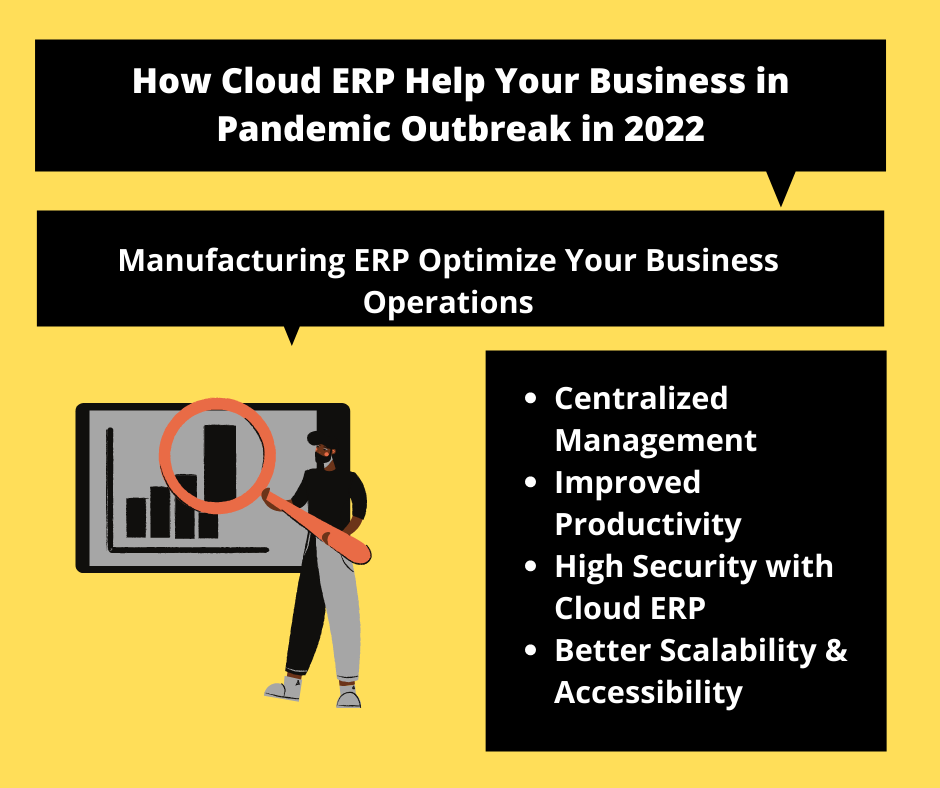
When the Cloud ERP Covid-19 pandemic came upon. It ushered in radical uncertainty and caused...

