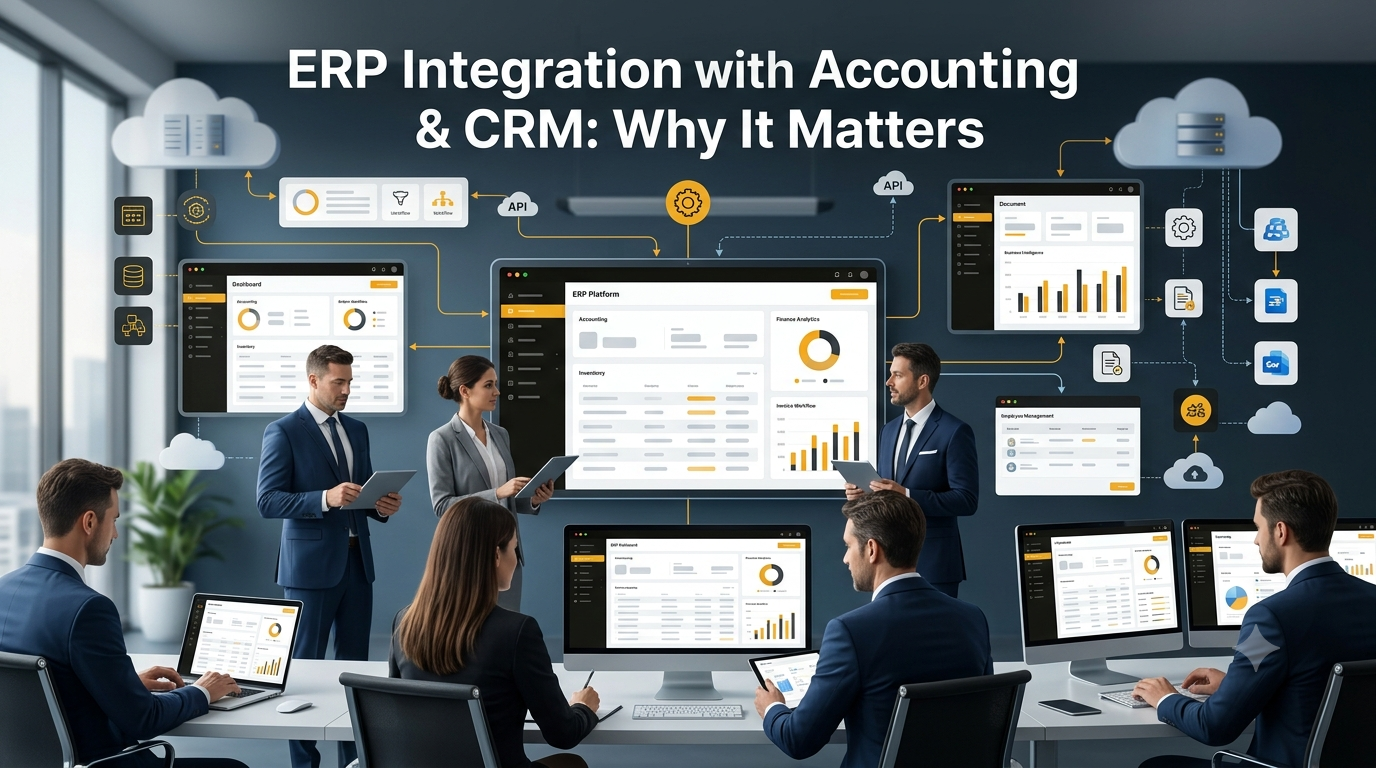
Businesses today use multiple software solutions to manage operations, customer relationships, finances, inventory, and employee data. While each system serves an important purpose, disconnected platforms often create duplicate work, inconsistent records, and reporting challenges. This is where ERP integration becomes essential. By connecting accounting software, CRM platforms, and operational systems, businesses gain a centralized view of their data, improve collaboration, and reduce manual effort. Choosing the right erp software for small business helps organizations automate workflows, improve decision-making, and prepare for long-term growth without increasing operational complexity.
Modern businesses generate information from every department. Sales teams manage customer interactions, finance teams handle invoices and payments, while operations oversee inventory and purchasing. Without ERP integration, these systems operate independently, leading to data silos and communication gaps. Integrating them allows businesses to work from a single source of truth, improving efficiency and accuracy across departments.
ERP integration refers to connecting enterprise resource planning software with other business applications such as accounting platforms, CRM systems, payroll software, inventory management, and eCommerce solutions. Instead of manually transferring information between systems, data automatically flows across connected applications.
For companies selecting erp software for small business, integration capabilities are often one of the most valuable features. They simplify daily operations while ensuring every department works with updated and accurate information.
Integration uses APIs, middleware, or built-in connectors to exchange information between applications in real time or at scheduled intervals. This minimizes delays and reduces the risk of inconsistent records.
ERP integration automating accounting and financial management.
Accounting departments manage invoices, taxes, payroll, expenses, and financial reporting. When accounting software operates separately from business operations, finance teams spend significant time entering and reconciling data manually.
Integrating ERP with accounting software ensures every transaction automatically updates financial records. Sales invoices, purchase orders, inventory costs, and payment information remain synchronized, improving financial accuracy.
ERP and CRM integration creating a connected customer experience.
Customer Relationship Management software stores customer details, sales activities, support tickets, and communication history. Connecting CRM with ERP allows customer information to move seamlessly between sales, finance, and operations.
Sales representatives gain visibility into inventory, order status, and customer payment history without switching between applications. Finance teams receive accurate billing information, while customer support can access complete order records.
Businesses implementing ERP integration experience measurable improvements in efficiency, collaboration, and decision-making. Rather than maintaining isolated systems, organizations benefit from centralized information that supports every department.
The right erp software for small business provides automation features that reduce operational costs while improving productivity and scalability.
Disconnected software creates numerous operational problems. Employees often spend valuable time searching for information, updating spreadsheets, or correcting inconsistent records. These inefficiencies become increasingly expensive as businesses grow.
Without integration, managers may struggle to obtain accurate reports because information exists across multiple platforms instead of a centralized system.
Not every ERP solution offers the same integration capabilities. Businesses should evaluate software based on flexibility, scalability, security, automation, and compatibility with existing business tools.
Selecting reliable erp software for small business ensures future expansion without requiring expensive software replacements.
Look for ERP platforms that include:
Business decisions are only as reliable as the information available. Integrated systems provide management teams with accurate, real-time dashboards covering sales, finance, inventory, customer service, and operations.
Instead of waiting for departments to compile reports manually, executives can monitor business performance through centralized analytics. This enables proactive planning and faster responses to market changes.
Almost every industry benefits from integrating ERP with accounting and CRM systems. Businesses handling customer orders, inventory, financial transactions, or service operations experience significant efficiency improvements.
Whether operating in manufacturing, retail, healthcare, logistics, or professional services, integrated ERP systems simplify workflows and reduce administrative burdens.
Small businesses require ERP solutions that balance functionality, affordability, and scalability. Complex enterprise systems may include unnecessary features that increase costs without delivering proportional value.
When evaluating erp software for small business, businesses should prioritize integration capabilities, ease of implementation, customer support, and long-term scalability.
Integrated ERP software driving long-term business growth.
Growth introduces new customers, employees, suppliers, products, and financial transactions. Managing this expansion with disconnected software becomes increasingly difficult.
Integrated ERP systems create standardized processes that scale alongside business operations. Automation reduces administrative workloads while providing management with consistent access to accurate operational data.
Organizations adopting ERP integration position themselves for sustainable expansion by improving operational efficiency, financial management, and customer satisfaction.
Implementing ERP integration with accounting and CRM systems is no longer optional for businesses seeking operational efficiency and sustainable growth. Integrated platforms eliminate data silos, automate repetitive processes, improve reporting accuracy, and strengthen collaboration across departments. Investing in the right erp software for small business enables organizations to streamline daily operations while building a scalable foundation for future success. Businesses that prioritize integration today are better equipped to improve customer experiences, make informed decisions, and remain competitive in an increasingly digital marketplace.
ERP integration connects ERP software with other business applications like accounting, CRM, payroll, inventory, and eCommerce platforms, allowing data to flow automatically between systems.
It eliminates duplicate data entry, improves reporting accuracy, enhances collaboration, and provides real-time business insights for better decision-making.
ERP automatically synchronizes invoices, payments, purchase orders, expenses, inventory costs, and financial transactions, reducing manual bookkeeping.
CRM integration provides complete customer information across departments, enabling better sales management, customer service, and order processing.
Yes. Modern erp software for small business offers scalable, cloud-based solutions with affordable pricing and built-in integration capabilities that support business growth.

A profitable business does not merely depend on a good product but is significantly liable...

The ERP manufacturing companies are evolving and expanding at a rapid pace, thereby increasing competition...

In a short span of time, customer relationship management software has enormously advanced and picked...

Every year, we see the rise of new technologies., With each rising technology, we see...

The emerging economies are powering global growth. The world has witnessed the rise of manufacturing...

India is the world’s largest home to small and large-scale industries and a central hub...
The outbreaks of the Covid-19 virus caused worldwide panics and delivered a consequential blow to...
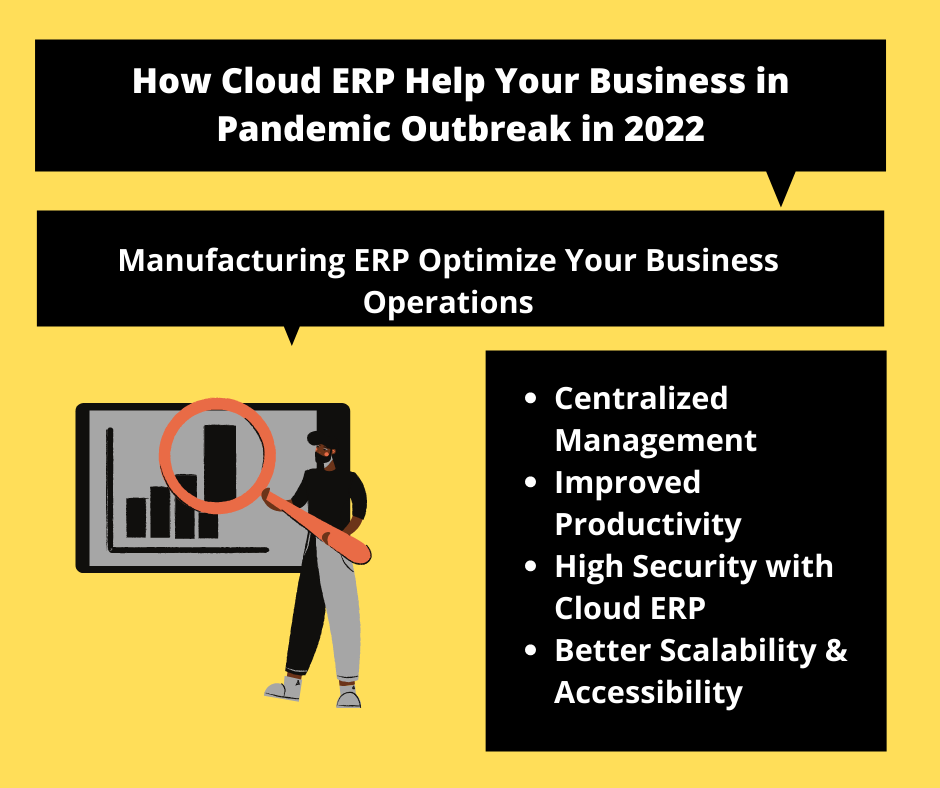
When the Cloud ERP Covid-19 pandemic came upon. It ushered in radical uncertainty and caused...

