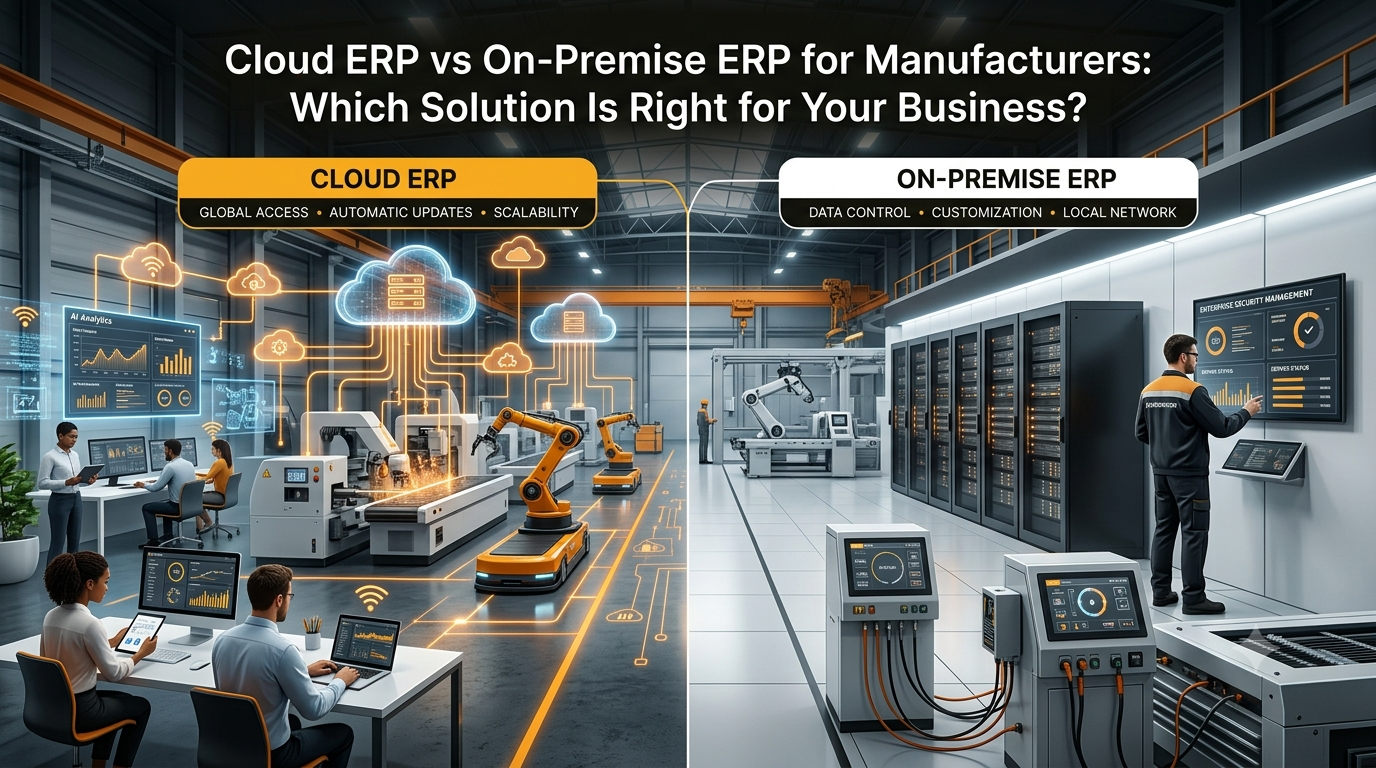
Enterprise Resource Planning (ERP) systems have become a critical component of modern manufacturing operations. From inventory management and production planning to procurement, finance, quality control, and supply chain coordination, ERP software helps manufacturers streamline processes and improve operational efficiency.
As digital transformation accelerates across the manufacturing sector, businesses are increasingly faced with an important decision: should they invest in a Cloud ERP solution or continue with a traditional On-Premise ERP system?
Both deployment models offer unique advantages and challenges. While cloud-based ERP platforms promise flexibility, scalability, and lower upfront costs, on-premise systems provide greater control, customization, and direct ownership of infrastructure. The right choice depends on several factors, including company size, budget, compliance requirements, IT capabilities, and long-term growth plans.
This guide explores the differences between cloud and on-premise ERP systems specifically for manufacturers, helping decision-makers understand the strengths, limitations, and ideal use cases for each approach.

ERP systems unify manufacturing operations through centralized business management.
Before comparing cloud and on-premise ERP systems, manufacturers must understand what each deployment model actually means and how it impacts business operations.
Cloud ERP is software hosted on remote servers managed by a vendor and accessed through the internet. Users can log in from virtually any location using a web browser or mobile device.
Key characteristics include:
Cloud ERP has gained popularity among manufacturers looking to modernize operations without investing heavily in IT infrastructure.
On-premise ERP is installed locally on a company’s servers and managed by its internal IT team.
Common characteristics include:
Many established manufacturing companies continue using on-premise ERP because of specific operational, security, or customization requirements.
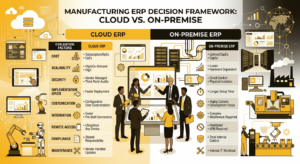
Manufacturers must evaluate multiple factors before selecting an ERP deployment model.
Cost is often one of the most significant considerations when choosing between cloud and on-premise ERP systems.
Cloud ERP generally requires a lower upfront investment because businesses pay recurring subscription fees rather than purchasing hardware and software licenses outright. This makes cloud solutions attractive to small and mid-sized manufacturers with limited capital budgets. Implementation costs are typically lower, and ongoing maintenance expenses are handled by the vendor.
On-premise ERP, however, requires substantial initial investment. Manufacturers must purchase:
While upfront costs are higher, some organizations find that long-term ownership may become cost-effective over several years, particularly for large enterprises with extensive operations.
Manufacturers should evaluate Total Cost of Ownership (TCO) over a five- to ten-year period rather than focusing solely on implementation expenses. Hidden costs such as upgrades, maintenance, system downtime, training, and infrastructure replacement should also be included in the analysis.
The financial decision often depends on organizational size, growth projections, and available capital resources.
Manufacturing companies frequently experience fluctuations in production volumes, workforce size, inventory levels, and customer demand. ERP scalability becomes crucial for supporting business growth.
Cloud ERP offers significant advantages in scalability. Organizations can quickly add users, locations, production facilities, or storage capacity without major infrastructure investments. Resources can often be adjusted based on current business needs.
Benefits of cloud scalability include:
On-premise ERP systems can also scale, but doing so typically requires additional hardware purchases, server upgrades, and IT planning. These upgrades may involve downtime and significant investment.
For rapidly growing manufacturers, cloud ERP often provides a more agile foundation for expansion. Companies expecting substantial growth may benefit from the flexibility cloud environments offer, especially when entering new regions or adopting additional manufacturing capabilities.
Organizations with relatively stable operations, however, may find the scalability benefits less compelling compared to the control offered by on-premise solutions.
Security remains one of the most debated topics when comparing cloud ERP and on-premise ERP systems.
Many manufacturers initially assume on-premise systems provide superior security because data remains within their own facilities. With complete control over servers and infrastructure, organizations can establish customized security policies tailored to their requirements.
Advantages of on-premise security control include:
However, modern cloud ERP vendors invest heavily in cybersecurity technologies, often providing security measures that exceed what many manufacturers can achieve independently.
Cloud ERP security features commonly include:
Compliance requirements also influence ERP deployment decisions. Industries such as aerospace, defense, pharmaceuticals, and medical manufacturing may have strict regulations governing data storage and access.
Manufacturers must carefully assess industry-specific compliance standards, customer requirements, and internal governance policies before selecting an ERP deployment model.
ERP implementation can significantly impact business operations, making deployment speed an important factor for manufacturers.
Cloud ERP implementations are generally faster because infrastructure setup is handled by the vendor. Companies can often begin configuring workflows and training users shortly after purchasing the solution.
Common cloud ERP deployment advantages include:
On-premise ERP deployments tend to be more complex. Organizations must install hardware, configure servers, establish security controls, and prepare network environments before implementation can begin.
Additional challenges may include:
For manufacturers seeking rapid digital transformation, cloud ERP often provides a faster path to modernization. Businesses looking to replace legacy systems quickly may find cloud deployment especially beneficial.
However, organizations with highly specialized manufacturing workflows may require longer implementation periods regardless of deployment model due to extensive customization and process redesign requirements.
Manufacturing operations often involve unique production processes, industry regulations, quality management standards, and supply chain requirements.
One area where on-premise ERP traditionally excels is customization. Manufacturers can modify software extensively to match specific operational workflows and business processes.
Customization advantages may include:
Historically, cloud ERP solutions offered less flexibility. However, modern cloud platforms have significantly expanded customization capabilities through configurable workflows, APIs, extensions, and low-code development tools.
Even so, manufacturers with extremely specialized requirements may still find on-premise ERP more suitable.
The choice often comes down to balancing customization needs against maintenance complexity. Excessive customization can increase implementation costs, create upgrade challenges, and reduce long-term system flexibility.
Performance is a critical factor in manufacturing environments where delays can affect production schedules, inventory accuracy, and customer deliveries. ERP systems must process large amounts of data in real time while supporting multiple departments simultaneously.
On-premise ERP systems traditionally offer strong performance because companies control their hardware infrastructure and network environment. Manufacturers can optimize servers specifically for their operational requirements and ensure critical applications receive sufficient resources. This level of control is particularly valuable for facilities running complex production planning systems or high-volume transaction processing.
Cloud ERP performance has improved dramatically in recent years. Modern providers operate highly sophisticated data centers with advanced infrastructure, redundancy, and performance optimization technologies. Many cloud vendors offer service-level agreements (SLAs) that guarantee uptime and system availability.
When evaluating performance, manufacturers should consider:
For most manufacturers, both deployment models can deliver excellent performance when properly implemented. The decision often depends on operational complexity, connectivity reliability, and performance expectations rather than deployment model alone.
Manufacturing organizations increasingly operate across multiple facilities, warehouses, supplier networks, and remote offices. ERP accessibility has therefore become more important than ever.
Cloud ERP provides significant advantages in workforce mobility. Employees can securely access information from virtually anywhere with an internet connection. This capability supports hybrid work environments and improves collaboration across departments and locations.
Benefits of cloud-based accessibility include:
Manufacturing executives can monitor key performance indicators, review production reports, approve purchase orders, and analyze inventory levels without being physically present at a facility.
On-premise ERP systems can support remote access, but doing so often requires additional infrastructure such as VPNs, remote desktop solutions, and specialized security configurations. These setups may increase complexity and maintenance requirements.
As manufacturing becomes increasingly connected and globally distributed, mobility is becoming a major factor influencing ERP purchasing decisions.
Today’s manufacturers rely on a wide range of technologies beyond ERP software. Successful operations often require integration with production equipment, quality systems, warehouse management platforms, and supply chain applications.
Common manufacturing technologies that may require ERP integration include:
On-premise ERP systems have historically offered extensive integration flexibility because organizations have direct access to infrastructure and databases. Custom integrations can be developed to accommodate highly specialized manufacturing environments.
Cloud ERP vendors now provide extensive integration capabilities through APIs, connectors, and integration platforms. These tools simplify connections with both cloud and on-premise applications.
Manufacturers should evaluate:
The ability to create a connected digital manufacturing environment may be more important than the deployment model itself.
Unexpected disruptions can have severe consequences for manufacturing operations. Equipment failures, cyberattacks, natural disasters, and power outages can all impact ERP availability.
Cloud ERP solutions generally provide strong disaster recovery capabilities because vendors maintain geographically distributed data centers with built-in redundancy. Backups, failover systems, and recovery procedures are typically included as part of the service.
Advantages of cloud disaster recovery include:
On-premise ERP systems require manufacturers to develop and maintain their own disaster recovery strategies. This often involves secondary data centers, backup hardware, and dedicated recovery procedures.
While some large enterprises possess the resources to build robust disaster recovery infrastructures, many mid-sized manufacturers find cloud-based recovery capabilities more practical and cost-effective.
Business continuity planning should remain a key component of ERP selection, especially for manufacturers operating around-the-clock production environments.
One concern frequently raised regarding cloud ERP is vendor dependence. Since the software, infrastructure, and updates are managed by the provider, organizations rely heavily on the vendor’s performance and long-term stability.
Potential cloud ERP considerations include:
On-premise ERP offers greater organizational control. Manufacturers own their infrastructure, determine upgrade schedules, and manage system changes according to business priorities.
Advantages of on-premise control include:
However, greater control also brings greater responsibility. Internal teams must manage security, maintenance, infrastructure upgrades, and system reliability.
Manufacturers should carefully assess whether they prefer operational control or reduced administrative burden when evaluating deployment options.
The ideal ERP deployment model often varies based on company size and operational complexity.
Small manufacturing businesses frequently prioritize affordability, ease of deployment, and limited IT requirements.
Cloud ERP is often the preferred choice because it offers:
These benefits allow smaller organizations to focus on growth rather than technology management.
Mid-sized manufacturers often require a balance between scalability, customization, and cost control.
Many organizations in this category choose cloud ERP because it supports expansion while minimizing infrastructure investments. However, companies with highly specialized production processes may still prefer on-premise solutions.
Large enterprises often possess extensive operational requirements, complex integrations, and significant customization needs.
Depending on their priorities, they may select:
The decision usually depends on compliance requirements, global operations, and digital transformation objectives rather than company size alone.

ERP systems help manufacturers improve efficiency, visibility, and business performance.
ERP technology continues to evolve rapidly alongside advancements in manufacturing innovation.
Several trends are shaping the future of ERP systems:
Modern ERP platforms increasingly incorporate AI-powered capabilities such as:
Manufacturers are demanding deeper insights into operational performance through real-time dashboards and business intelligence tools.
ERP systems are becoming central hubs for Industry 4.0 initiatives by connecting:
Many software providers are prioritizing cloud innovation, releasing new features and enhancements more frequently in cloud environments than traditional on-premise systems.
These trends suggest that cloud ERP adoption will continue growing across the manufacturing sector, although on-premise solutions will remain relevant for organizations with specialized requirements.

Selecting the right ERP deployment model is essential for long-term manufacturing success.
The debate between cloud ERP and on-premise ERP is not about determining a universally superior solution. Instead, it involves identifying which deployment model aligns best with a manufacturer’s operational goals, budget, compliance requirements, growth strategy, and technology capabilities.
Cloud ERP excels in scalability, accessibility, deployment speed, disaster recovery, and reduced infrastructure management. It is particularly attractive for organizations pursuing digital transformation and long-term agility.
On-premise ERP remains valuable for manufacturers that require extensive customization, strict control over infrastructure, specialized compliance management, or unique operational configurations.
For many modern manufacturers, the future increasingly points toward cloud-based ERP solutions due to ongoing innovation, AI integration, Industry 4.0 connectivity, and lower barriers to adoption. However, organizations should conduct a thorough assessment of their specific needs before making a decision.
Ultimately, the best ERP deployment model is the one that enables manufacturers to improve efficiency, increase visibility, optimize production processes, and support sustainable business growth in an increasingly competitive market.
Cloud ERP is hosted on the vendor’s servers and accessed through the internet, while On-Premise ERP is installed and managed on a company’s own servers and infrastructure. Cloud ERP offers greater flexibility and accessibility, whereas On-Premise ERP provides more control over systems and data.
There is no one-size-fits-all answer. Cloud ERP is often ideal for manufacturers seeking scalability, lower upfront costs, and faster deployment. On-Premise ERP may be better for organizations that require extensive customization, strict compliance controls, or complete infrastructure ownership.
Cloud ERP typically has lower upfront costs because it uses a subscription-based pricing model. On-Premise ERP requires significant initial investments in hardware, software licenses, and IT resources. However, long-term costs should be evaluated based on business needs and growth plans.
Modern Cloud ERP providers invest heavily in cybersecurity measures such as encryption, automated updates, multi-factor authentication, and continuous monitoring. In many cases, they can offer security levels that match or exceed those maintained by individual manufacturers.
Yes. Cloud ERP is designed to support multi-site operations, allowing manufacturers to manage production facilities, warehouses, and offices from a centralized platform with real-time visibility across locations.

A profitable business does not merely depend on a good product but is significantly liable...

The ERP manufacturing companies are evolving and expanding at a rapid pace, thereby increasing competition...

In a short span of time, customer relationship management software has enormously advanced and picked...

Every year, we see the rise of new technologies., With each rising technology, we see...

The emerging economies are powering global growth. The world has witnessed the rise of manufacturing...

India is the world’s largest home to small and large-scale industries and a central hub...
The outbreaks of the Covid-19 virus caused worldwide panics and delivered a consequential blow to...
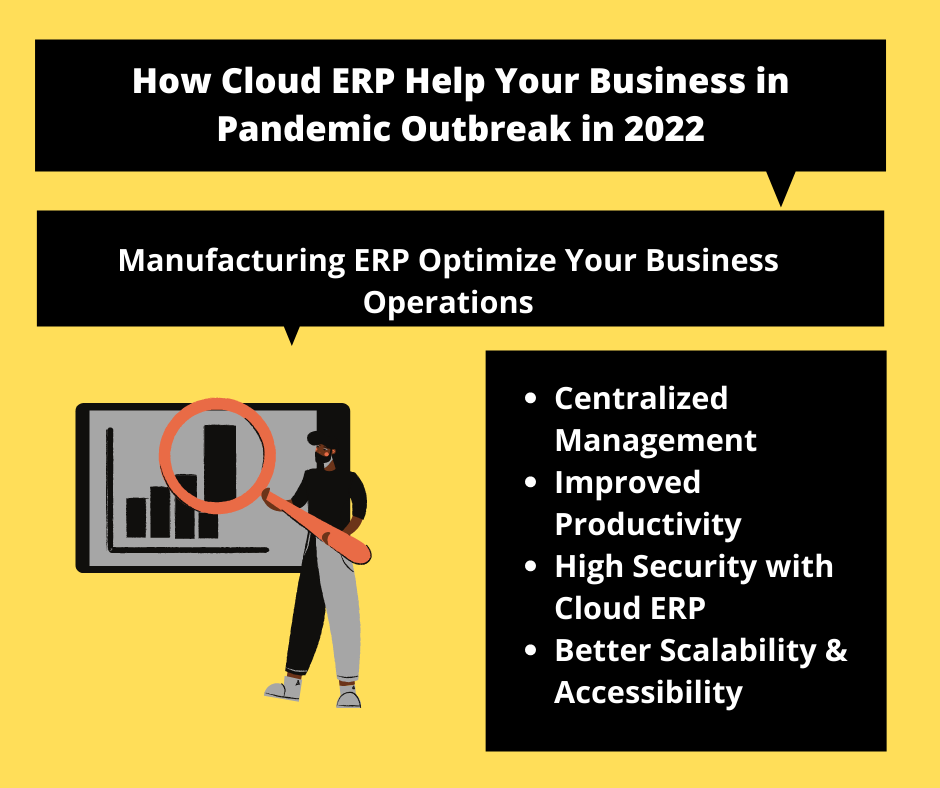
When the Cloud ERP Covid-19 pandemic came upon. It ushered in radical uncertainty and caused...

