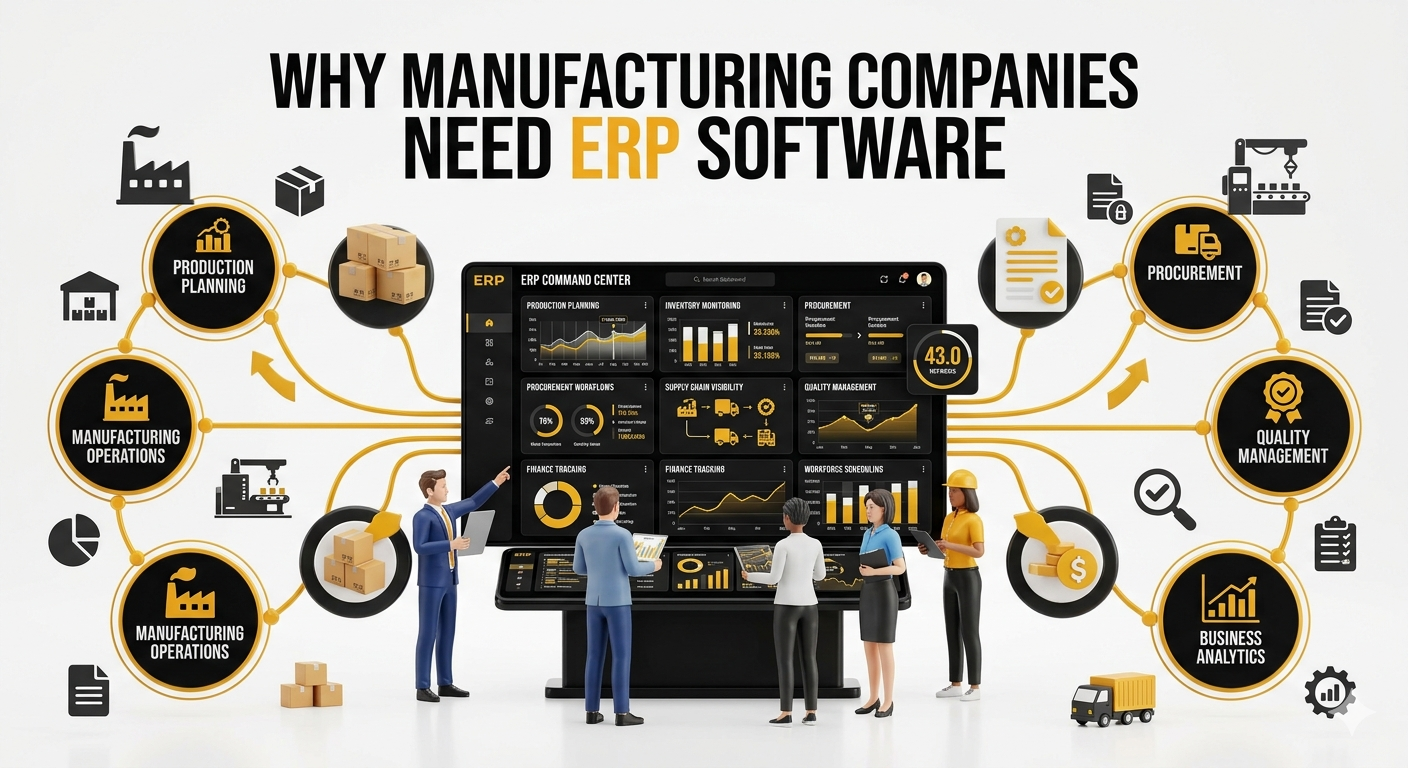
Manufacturing companies operate in an environment where production efficiency, inventory accuracy, supply chain visibility, quality control, and cost management directly impact profitability. Managing these interconnected functions through spreadsheets or disconnected software systems often creates operational bottlenecks, data silos, and decision-making delays.
This is where ERP software for manufacturing industry operations becomes essential. Enterprise Resource Planning (ERP) systems provide a centralized platform that connects production, procurement, inventory, sales, finance, quality management, and supply chain activities into a unified ecosystem. Instead of departments working independently, manufacturing organizations gain real-time visibility across the entire production lifecycle.
However, many manufacturers struggle to understand which ERP capabilities are truly important. The market is filled with numerous features, modules, and industry-specific functionalities, making ERP selection and implementation challenging.
This article provides a detailed breakdown of ERP software for manufacturing industry environments, including core features, essential ERP modules, and practical manufacturing use cases. The goal is to help manufacturers understand exactly how ERP systems support production operations and why specific modules matter for operational success.
Manufacturing businesses manage significantly more operational complexity than many other industries. Every production order depends on raw material availability, machine capacity, workforce scheduling, supplier performance, inventory levels, quality standards, and customer demand.
Without integrated systems, manufacturers often face challenges such as:
ERP software addresses these challenges by creating a single source of truth for manufacturing data.
For example, when a sales order enters the system, ERP software can automatically trigger material requirement calculations, production planning activities, inventory reservations, procurement requests, and delivery schedules. This interconnected workflow eliminates manual coordination between departments.
Manufacturing organizations also benefit from:
ERP systems help manufacturers align production schedules with actual customer demand, available inventory, and machine capacity. This reduces idle resources and minimizes production bottlenecks.
Manufacturers gain accurate inventory information across warehouses, production floors, and supply chains. This visibility helps prevent stockouts and excessive inventory carrying costs.
ERP systems track material costs, labor costs, machine utilization, overhead allocation, and production expenses, enabling more accurate profitability analysis.
Procurement teams can monitor supplier performance, purchase orders, lead times, and material availability from a centralized platform. Learn more about how ERP systems support supply chain management.
Executives and operations managers gain access to real-time dashboards and reporting tools that support informed decisions. ERP systems are among the most critical investments for improving organizational agility and decision speed.
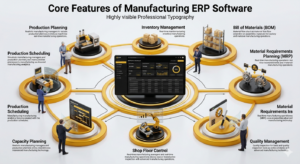
Manufacturing ERP systems combine planning, inventory, production, quality, and scheduling capabilities into one centralized platform.
Manufacturing ERP systems include specialized capabilities that go beyond standard business management functions. These features are specifically designed to support production environments.
Production planning is one of the most important ERP capabilities for manufacturers.
ERP software enables organizations to:
Advanced scheduling tools help manufacturers avoid conflicts between production demands and available resources.
Instead of manually creating schedules, planners can use ERP-generated recommendations based on demand forecasts, inventory levels, and production capacity.
Inventory management is critical in manufacturing because raw materials, work-in-progress inventory, and finished goods all impact production continuity.
Manufacturing ERP systems typically provide:
These capabilities help ensure materials are available when needed while minimizing excess inventory investment. Industries such as food processing, pharmaceuticals, and electronics manufacturing particularly rely on precise inventory controls to maintain compliance and production continuity.
The Bill of Materials serves as the foundation of manufacturing operations.
ERP software allows manufacturers to:
Accurate BOM management ensures production teams use the correct materials, quantities, and assemblies during manufacturing. This is especially critical in industries like automotive manufacturing and industrial equipment production, where multi-level assemblies are common.
Material Requirements Planning helps manufacturers determine:
MRP engines analyze production schedules, current inventory levels, lead times, and demand forecasts to generate procurement recommendations.
This feature significantly reduces manual planning effort while improving material availability. Manufacturers in sectors such as chemical manufacturing and plastics manufacturing benefit greatly from MRP-driven procurement automation.
Shop floor management features provide visibility into production activities as they occur.
Manufacturers can monitor:
Real-time shop floor tracking allows supervisors to identify and address operational issues quickly. According to NIST’s manufacturing resources, real-time production monitoring is a key driver of operational efficiency improvements in modern manufacturing facilities.
Quality control is a major requirement for manufacturing organizations, especially those operating in regulated industries.
ERP quality management features often include:
These capabilities help manufacturers maintain consistent product quality while meeting industry standards. Regulated sectors such as pharmaceutical manufacturing and medical device manufacturing rely heavily on ERP-driven quality management to meet compliance requirements set by bodies such as the ISO 9001 Quality Management Standard.
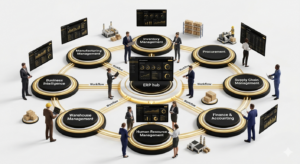
Manufacturing ERP software improves operational efficiency through automation, visibility, planning accuracy, and cost control.
One of the most common areas of confusion during ERP evaluation involves understanding ERP modules. Not every manufacturing company requires every available module, but several core modules are considered essential.
The manufacturing management module acts as the operational backbone of the ERP system.
It supports:
This module directly controls manufacturing activities and coordinates production workflows.
Without a robust manufacturing module, ERP software cannot effectively support complex production environments.
Inventory management remains one of the highest-value ERP modules for manufacturers.
The module helps organizations:
Manufacturers rely on inventory modules to maintain production continuity while reducing inventory waste.
The procurement module manages purchasing activities and supplier interactions.
Capabilities typically include:
For manufacturers that depend on large supplier networks, procurement visibility is critical for maintaining production schedules.
Supply chain modules provide broader visibility beyond procurement.
Functions often include:
This module becomes increasingly valuable as manufacturing operations scale across multiple facilities or geographic regions.
Manufacturing organizations require accurate financial visibility across production operations.
ERP finance modules support:
Manufacturers can connect production activities directly to financial performance, improving cost analysis and profitability tracking.
Labor is a major operational cost in manufacturing environments.
HR modules help manage:
When integrated with production systems, workforce data contributes to more accurate labor cost calculations.
Understanding ERP features is important, but practical manufacturing use cases provide a clearer picture of business value.
Material shortages can halt production lines and create costly delivery delays.
Without ERP software, procurement teams often rely on manual inventory checks and spreadsheets. This approach increases the risk of stockouts.
With ERP-driven Material Requirements Planning:
As a result, manufacturers maintain production continuity while reducing emergency purchasing costs.
Manufacturers producing complex products often manage multiple assembly stages.
For example, a finished product may require:
ERP software uses Bills of Materials, routing structures, and production workflows to coordinate these dependencies.
Production planners gain visibility into every stage of manufacturing, helping ensure that each component is available at the correct time and location.
This reduces production delays and improves schedule reliability.
Production scheduling becomes increasingly difficult as manufacturing operations grow. Multiple production lines, varying machine capacities, labor availability, maintenance schedules, and customer deadlines create a complex planning environment.
Without ERP software, production planners often spend significant time manually updating schedules and resolving conflicts.
Manufacturing ERP systems improve scheduling accuracy by connecting:
When conditions change, the ERP system can automatically update planning recommendations.
For example, if a supplier shipment is delayed, the ERP platform can identify affected production orders and help planners adjust schedules before disruptions occur.
Benefits include:
This level of visibility allows manufacturers to make proactive decisions instead of reacting to problems after they occur.
Cost visibility is a major challenge for many manufacturers.
Product profitability depends on numerous variables, including:
ERP software consolidates these cost elements into a unified system.
Manufacturers can track:
This information helps management identify inefficiencies and improve profitability.
For example, if actual production costs consistently exceed standard costs, ERP reports can reveal whether the issue originates from excessive material consumption, labor inefficiencies, equipment downtime, or supplier price increases.
Rather than relying on assumptions, decision-makers gain access to measurable financial data.
Product quality directly affects customer satisfaction, warranty costs, compliance requirements, and brand reputation.
Manual quality management systems often struggle to provide complete visibility into inspection activities and defect trends.
ERP quality management modules integrate quality control directly into manufacturing operations.
Manufacturers can establish:
When quality issues occur, ERP systems help trace affected materials, production batches, work orders, and suppliers.
This traceability is particularly important for industries such as:
Integrated quality management reduces defect rates while supporting regulatory compliance and customer requirements.
Many manufacturers operate across multiple facilities, warehouses, or production plants.
Managing these locations independently often creates challenges such as:
ERP software centralizes data across locations.
Management teams can monitor:
For example, if one facility experiences a material shortage while another location holds excess inventory, the ERP system can identify transfer opportunities before new purchases are made.
This improves resource utilization while reducing inventory costs.
While core ERP modules address fundamental operational requirements, many manufacturers adopt advanced modules as their operations become more sophisticated.
Manufacturing organizations increasingly use CRM functionality to align customer demand with production planning.
CRM modules support:
When integrated with manufacturing operations, CRM data helps improve demand forecasting and production planning accuracy.
Sales teams gain visibility into production status, while operations teams gain visibility into future customer demand.
Warehouse operations play a significant role in manufacturing efficiency.
Advanced warehouse management modules provide:
Manufacturers handling large inventory volumes often benefit significantly from warehouse automation and improved inventory accuracy.
Equipment reliability is critical in manufacturing environments.
Unexpected equipment failures can result in:
Maintenance management modules help organizations implement preventive maintenance programs.
Capabilities typically include:
By proactively maintaining equipment, manufacturers reduce unplanned downtime and extend asset lifecycles.
Manufacturing companies generate large volumes of operational data.
Business intelligence modules transform this data into actionable insights.
Common analytics capabilities include:
These insights support strategic decision-making and continuous operational improvement.
Although ERP systems support virtually every manufacturing sector, certain industries derive particularly high value from manufacturing-specific functionality.
Discrete manufacturers produce individual products assembled from multiple components.
Examples include:
These organizations rely heavily on:
ERP software helps coordinate complex assembly processes while maintaining product traceability.
Process manufacturers produce goods through formulas, recipes, or chemical processes.
Examples include:
ERP systems support process manufacturing through:
These capabilities help maintain consistency across production runs.
Make-to-order manufacturers produce goods only after receiving customer orders.
This model requires close coordination between sales, procurement, inventory, and production teams.
ERP software helps manage:
Integrated workflows improve responsiveness while reducing planning complexity.
Engineer-to-order manufacturers design and build products based on unique customer requirements.
Examples often include:
ERP systems help manage:
This visibility supports better project execution and cost control.
Selecting ERP software requires more than comparing feature lists.
Manufacturers should evaluate systems based on operational fit and long-term business requirements.
Key evaluation criteria include:
The ERP platform should support the organization’s production model.
Important considerations include:
A manufacturing-focused ERP system generally provides stronger operational capabilities than a generic ERP platform. Small and mid-sized manufacturers can also explore ERP solutions designed for small businesses to find appropriately scaled options.
Manufacturing businesses often expand through new product lines, facilities, and markets.
ERP software should accommodate:
Scalable systems reduce the need for future platform replacements. The National Institute of Standards and Technology (NIST) highlights scalability and digital integration as key factors in modern manufacturing competitiveness.
Manufacturers frequently rely on additional systems such as:
ERP platforms should support integration with these technologies to maintain operational continuity.
Operational visibility depends on accurate reporting.
Manufacturers should evaluate:
Strong reporting tools help organizations make data-driven decisions.
ERP software for manufacturing industry operations serves as the central platform connecting production, inventory, procurement, supply chain, quality management, finance, and workforce activities. By integrating these functions into a unified system, manufacturers gain greater operational visibility, improve planning accuracy, reduce inefficiencies, and strengthen cost control.
Core ERP features such as production planning, inventory management, Bill of Materials management, Material Requirements Planning, shop floor control, and quality management directly address the operational challenges manufacturers face daily. Meanwhile, specialized ERP modules provide deeper functionality for procurement, supply chain management, maintenance, warehousing, analytics, and customer relationship management.
Understanding ERP modules and their practical use cases is essential for selecting the right solution. Rather than focusing solely on software features, manufacturers should evaluate how each module supports real production requirements, operational goals, and long-term growth strategies.
When implemented effectively, manufacturing ERP software becomes a foundation for efficiency, scalability, and informed decision-making across the entire manufacturing operation.
ERP software for the manufacturing industry is an integrated business management system that connects production, inventory, procurement, finance, quality management, supply chain, and other operational functions within a single platform. It helps manufacturers streamline processes, improve visibility, and increase operational efficiency.
Manufacturing companies use ERP software to manage complex operations, reduce manual processes, improve inventory accuracy, optimize production planning, control costs, and gain real-time visibility into business performance across departments.
MRP is a manufacturing ERP function that calculates material requirements based on production schedules, inventory levels, demand forecasts, and supplier lead times. It helps manufacturers ensure materials are available when needed while minimizing excess inventory.
ERP software provides real-time inventory tracking, stock monitoring, warehouse management, batch and lot tracking, and inventory valuation. These capabilities help manufacturers reduce stockouts, avoid overstocking, and maintain accurate inventory records.
A Bill of Materials (BOM) is a structured list of raw materials, components, subassemblies, and quantities required to manufacture a product. ERP systems use BOMs to support production planning, inventory control, and material requirement calculations.

A profitable business does not merely depend on a good product but is significantly liable...

The ERP manufacturing companies are evolving and expanding at a rapid pace, thereby increasing competition...

In a short span of time, customer relationship management software has enormously advanced and picked...

Every year, we see the rise of new technologies., With each rising technology, we see...

The emerging economies are powering global growth. The world has witnessed the rise of manufacturing...

India is the world’s largest home to small and large-scale industries and a central hub...
The outbreaks of the Covid-19 virus caused worldwide panics and delivered a consequential blow to...
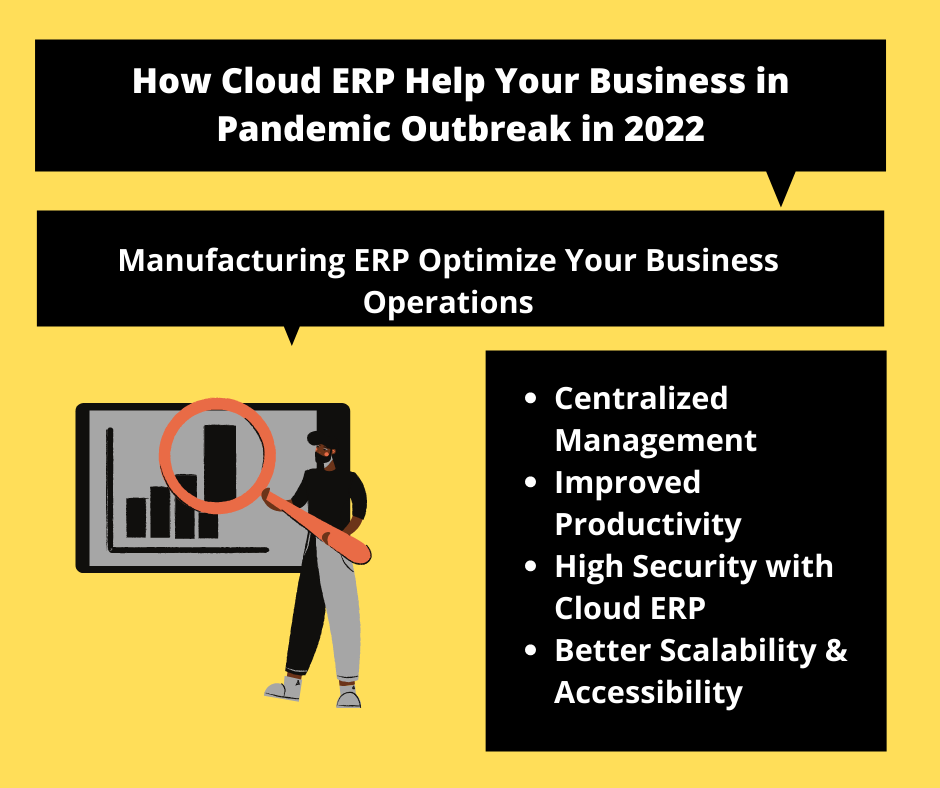
When the Cloud ERP Covid-19 pandemic came upon. It ushered in radical uncertainty and caused...

