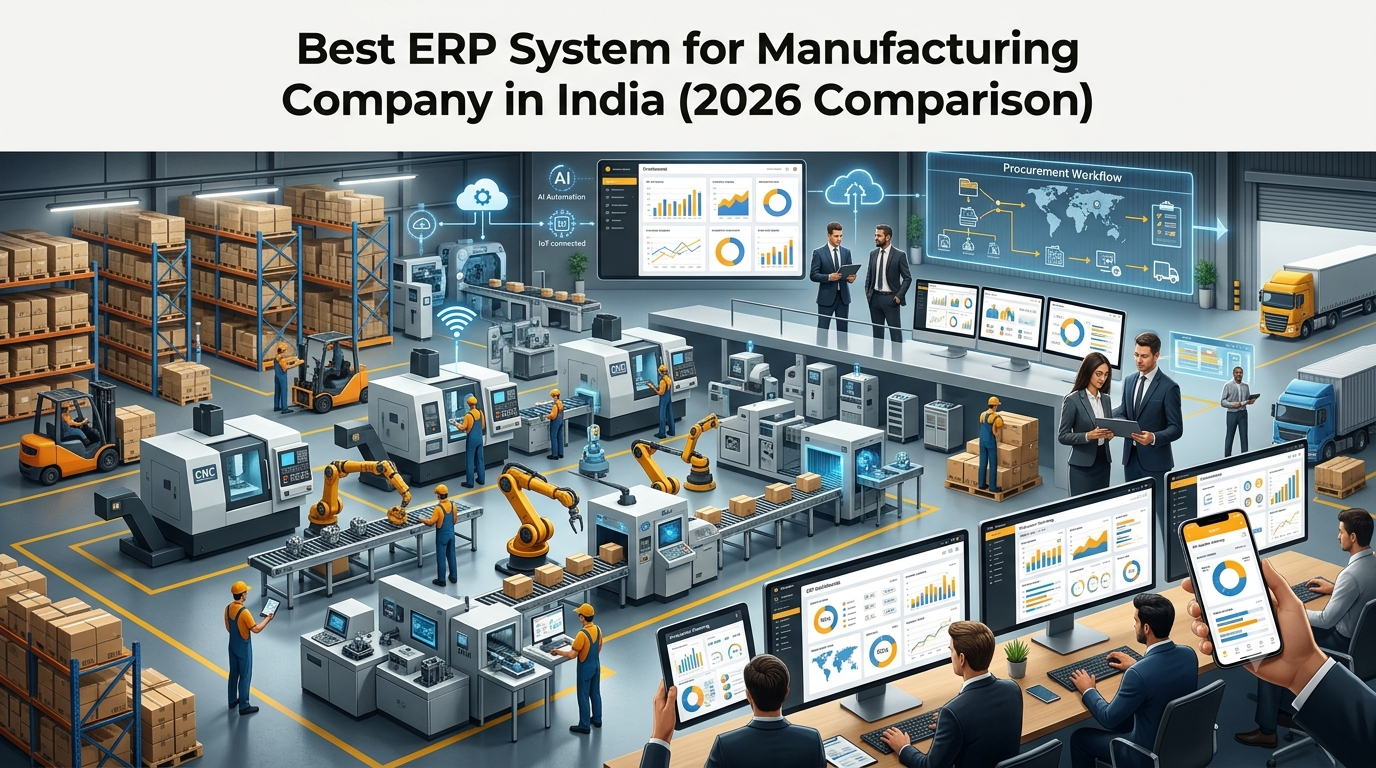
The Indian manufacturing sector is evolving rapidly with increased automation, digital transformation, Industry 4.0 adoption, and changing customer expectations. Businesses are moving away from manual processes and disconnected software to integrated ERP systems for manufacturing companies that streamline production, inventory, procurement, finance, and quality management.
Choosing the best ERP India solution is no longer just an IT decision—it directly impacts productivity, profitability, compliance, and business growth. However, with numerous ERP vendors offering different features, pricing models, and deployment options, selecting the right platform can be challenging.
This guide compares the leading ERP solutions for Indian manufacturers in 2026, explains the essential features to consider, and helps businesses choose software that aligns with their operational goals and future expansion plans.
Manufacturing businesses manage multiple interconnected operations every day, including procurement, inventory management, quality control, logistics, finance, and customer orders. Handling these processes through spreadsheets or disconnected software often leads to delays, duplicate work, inaccurate reporting, and unnecessary operational costs.
A modern ERP system for manufacturing company centralizes business operations into one platform, allowing every department to work with real-time information. This improves collaboration, reduces errors, and supports faster decision-making.
Not every ERP solution is built specifically for manufacturing. Industry-specific ERP software includes specialized tools that address production workflows, machine utilization, bill of materials, and shop floor management.
When evaluating the best ERP India solutions, manufacturers should focus on features that improve operational performance rather than simply replacing existing software.
Comparing modern ERP solutions for manufacturing businesses.
Several ERP platforms serve the Indian manufacturing industry. Each solution offers different strengths depending on company size, complexity, and business requirements.
Below is a comparison of some of the leading ERP software options.
| ERP Solution | Best For | Deployment | Key Strength |
|---|---|---|---|
| Autuscybertech | Medium & Large Manufacturers | Cloud & On-Premise | Enterprise-grade manufacturing |
| Oracle NetSuite | Growing Businesses | Cloud | Scalable cloud ERP |
| Microsoft Dynamics 365 | Large Enterprises | Cloud | Strong integration ecosystem |
| Odoo ERP | SMEs | Cloud & On-Premise | Open-source flexibility |
| ERPNext | Small Manufacturers | Cloud | Affordable customization |
| Ramco ERP | Manufacturing Enterprises | Cloud | Indian compliance |
| Infor CloudSuite | Industrial Manufacturing | Cloud | Advanced manufacturing tools |
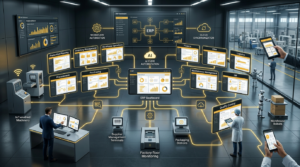
Core ERP modules powering efficient manufacturing operations.
An ERP delivers maximum value when all core business functions operate within one integrated ecosystem.
Manufacturers should prioritize ERP software that includes production management, procurement, finance, sales, inventory, and quality assurance in a unified platform. Integration eliminates duplicate data entry and improves reporting accuracy.
Deployment is one of the biggest decisions when choosing an ERP system for manufacturing company. Businesses can choose between cloud-based ERP and traditional on-premise software depending on budget, security requirements, and IT capabilities.
Cloud ERP has become increasingly popular because it reduces infrastructure costs while providing automatic updates and remote accessibility.
On-premise ERP may still be preferred by manufacturers with strict data control policies or complex legacy integrations.
Every manufacturing business has different operational needs. Selecting ERP software should involve evaluating current challenges, future growth plans, employee requirements, and budget constraints.
Rather than focusing only on software cost, companies should calculate the long-term value delivered through automation, improved productivity, and reduced operational inefficiencies.
ERP implementation is a business transformation project rather than a software installation. Organizations often face resistance to change, inadequate planning, and poor user adoption if implementation is rushed.
Working with an experienced ERP implementation partner significantly improves project success and minimizes operational disruption.
Manufacturers across India are investing in digital transformation to remain competitive in both domestic and international markets. Modern ERP platforms provide real-time visibility into operations, allowing businesses to optimize production, reduce waste, and improve customer satisfaction.
Government initiatives promoting manufacturing growth, GST compliance, and increasing customer expectations have further accelerated ERP adoption across industries.
Selecting the right implementation partner is just as important as selecting the ERP software itself. A knowledgeable ERP partner understands manufacturing workflows, identifies business requirements, and ensures smooth deployment with minimal disruption.
ASMAT helps manufacturing companies evaluate suitable ERP platforms, customize workflows, migrate data, integrate existing business systems, and provide ongoing technical support. The focus remains on improving operational efficiency while delivering measurable business outcomes rather than simply implementing software.
AI-powered manufacturing ERP shaping the future of smart factories.
ERP technology continues to evolve with artificial intelligence, predictive analytics, IoT integration, and cloud computing becoming standard capabilities.
Manufacturers adopting modern ERP platforms today are better positioned to leverage automation, machine learning, and advanced analytics in the future.
Selecting the best ERP system for manufacturing company requires more than comparing software features. Businesses should evaluate operational requirements, implementation expertise, scalability, integration capabilities, and long-term return on investment before making a decision.
Whether you’re a small manufacturer modernizing operations or a large enterprise planning digital transformation, choosing the right best ERP India solution can improve productivity, reduce costs, enhance visibility, and support sustainable business growth in 2026 and beyond.
The best solution depends on company size, manufacturing complexity, budget, deployment preference, and future scalability. Popular options include SAP Business One, Oracle NetSuite, Microsoft Dynamics 365, Odoo, ERPNext, and industry-specific ERP platforms.
Pricing varies based on users, modules, customization, deployment model, and implementation services. Cloud ERP generally requires lower upfront investment than on-premise solutions.
Cloud ERP offers scalability, lower infrastructure costs, automatic updates, and remote accessibility, making it a preferred choice for many manufacturers.
Production planning, inventory management, procurement, finance, warehouse management, quality control, CRM, and reporting are considered essential modules.
Implementation timelines typically range from a few months for small businesses to over a year for large enterprises, depending on project complexity and customization.

A profitable business does not merely depend on a good product but is significantly liable...

The ERP manufacturing companies are evolving and expanding at a rapid pace, thereby increasing competition...

In a short span of time, customer relationship management software has enormously advanced and picked...

Every year, we see the rise of new technologies., With each rising technology, we see...

The emerging economies are powering global growth. The world has witnessed the rise of manufacturing...
India is the world’s largest home to small and large-scale industries and a central hub...
The outbreaks of the Covid-19 virus caused worldwide panics and delivered a consequential blow to...
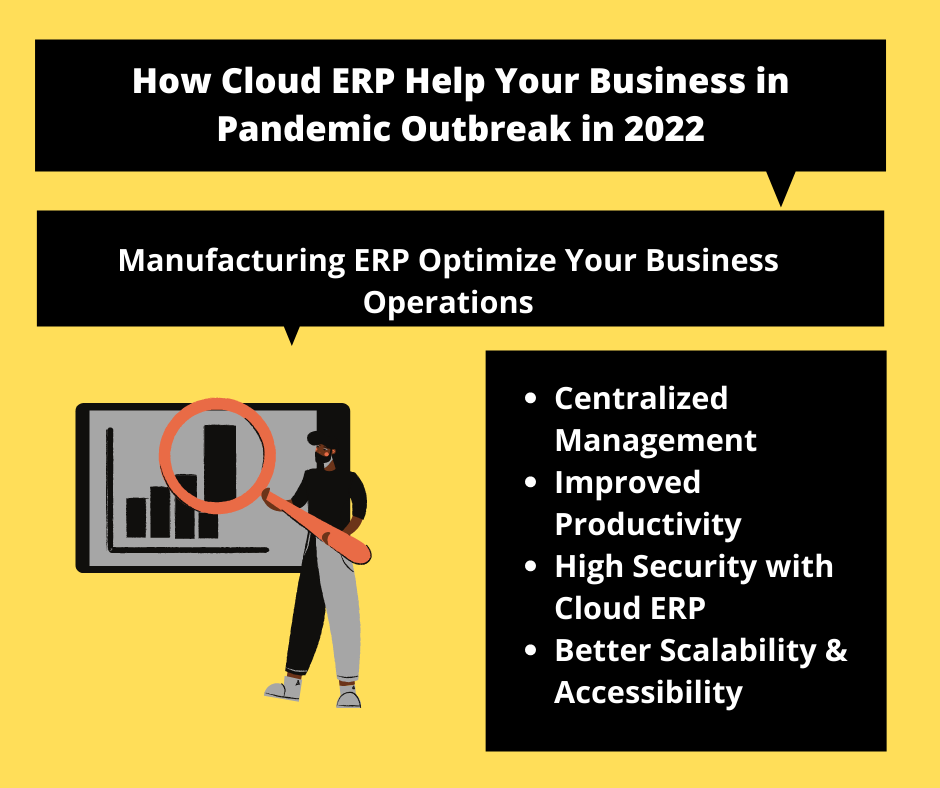
When the Cloud ERP Covid-19 pandemic came upon. It ushered in radical uncertainty and caused...

