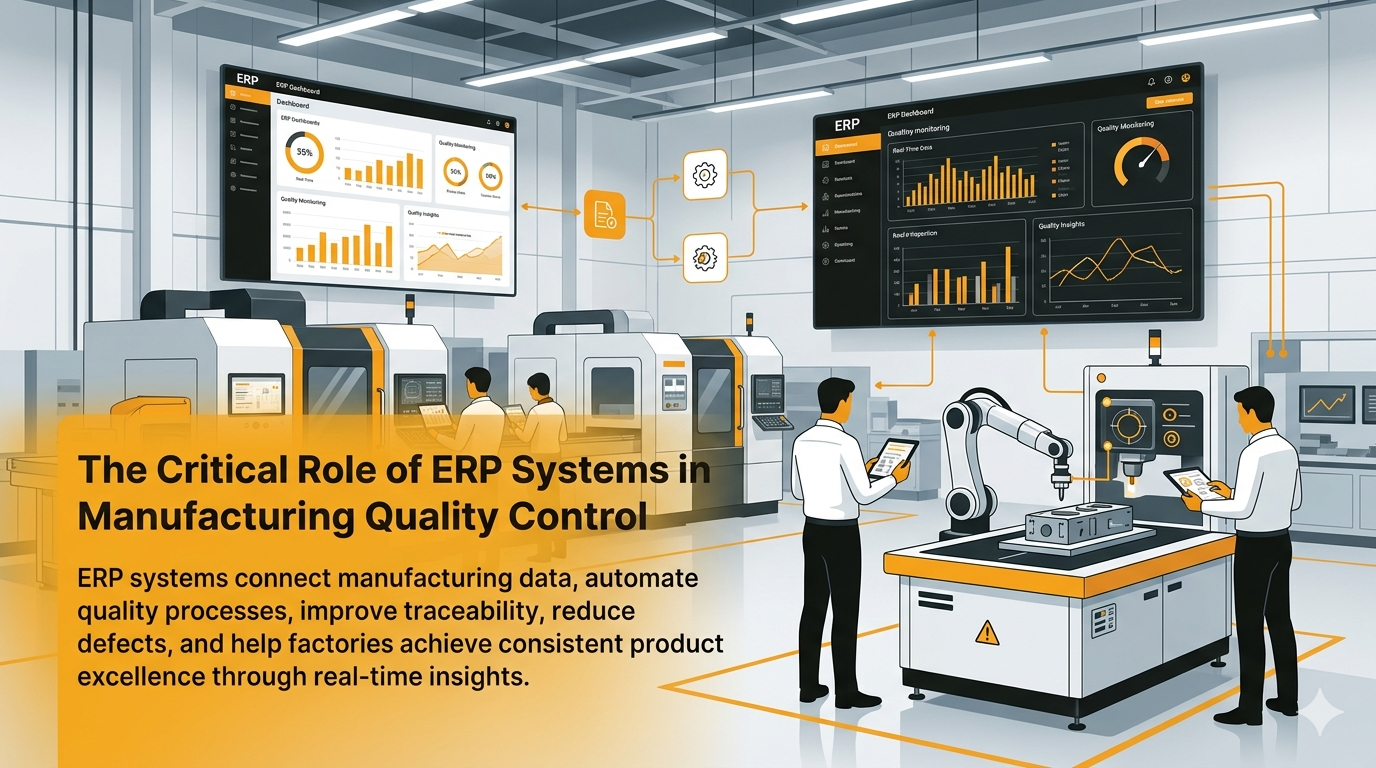
In the modern industrial landscape, maintaining product excellence is non-negotiable. An Enterprise Resource Planning (ERP) system serves as the backbone of manufacturing quality control, integrating data across the entire production lifecycle. By providing real-time visibility, automated tracking, and robust documentation, these systems enable manufacturers to detect defects early, ensure regulatory compliance, and consistently meet consumer expectations. This comprehensive guide explores how leveraging ERP software for quality management can transform production efficiency and drive long-term business growth through data-driven precision and proactive issue resolution.
ERP creates a unified system that connects production data and quality management processes.
At its core, ERP in manufacturing acts as a centralized brain for organizational data. When applied to quality assurance (QA), it ensures that every step—from raw material procurement to final assembly—adheres to predefined standards. By eliminating data silos, an ERP system provides a single source of truth that managers and technicians use to monitor performance metrics instantaneously. This integration allows for a seamless flow of information, reducing human error and ensuring that quality protocols are not just suggestions, but automated requirements ingrained in the production workflow.

Real-time ERP dashboards help manufacturers identify issues before they become costly defects.
Real-time monitoring allows manufacturers to shift from reactive firefighting to proactive prevention. Through an ERP-integrated quality module, sensors and input terminals record performance data as it happens, alerting operators to deviations before they escalate into significant production waste.
Continuous Data Acquisition: Capture metrics across every machine and workstation in real-time.
Immediate Deviation Alerts: Receive automated notifications the moment a process falls outside defined quality tolerance levels.
Reduced Rework Costs: Early detection prevents the manufacturing of large batches of non-conforming goods.
Performance Benchmarking: Compare live output against historical data to ensure consistent machine performance.
Manufacturers operate under strict industry standards such as ISO 9001 or FDA guidelines. An ERP system ensures that every process, from material sourcing to final inspection, is documented meticulously. This automated digital trail provides an ironclad defense during internal or external audits, as managers can pull historical data and quality certificates with a single click rather than sifting through fragmented paper records. By maintaining a perfect, searchable archive of production history, manufacturers can achieve and sustain certification effortlessly, fostering trust with stakeholders and regulators while significantly reducing the administrative burden typically associated with compliance management.
Quality control begins with the raw materials entering your facility. An ERP solution allows for rigorous supplier performance monitoring, ensuring that vendors consistently deliver goods that meet your technical specifications.
Automated Incoming Inspections: Mandatory quality checkpoints for all incoming materials before they enter the inventory pool.
Vendor Scorecarding: Rank suppliers based on defect rates, delivery accuracy, and compliance performance.
Certificate of Analysis (CoA) Management: Automatically store and verify digital documentation for all critical components.
Supply Chain Transparency: Identify recurring issues with specific suppliers to negotiate better quality or shift sourcing strategies.
ERP systems help manufacturers track products and solve quality problems quickly.
When a quality issue arises, the ability to trace the product backward to its origins is vital for minimizing the impact of a recall. ERP systems facilitate comprehensive lot and serial number tracking, enabling precise identification of affected units across the global supply chain.
End-to-End Visibility: Track a single component from raw material batch to the finished product delivered to the customer.
Root Cause Investigation: Use historical logs to determine if a failure originated from a raw material batch, a specific operator, or machine calibration.
Controlled Recall Procedures: Isolate affected inventory quickly to limit financial and brand damage.
Actionable Insights: Use failure analysis to implement process changes that prevent recurrence.
Consistency is the cornerstone of quality. By embedding Standard Operating Procedures (SOPs) directly into the ERP workflow, manufacturers ensure that every employee follows the same optimized method for assembly, testing, and documentation regardless of their shift or department.
Workflow Enforcement: Digital prompts prevent operators from proceeding to the next manufacturing step until quality tests are cleared.
Version Control: Ensure the entire workforce uses the most up-to-date drawings, recipes, and assembly instructions.
Standardized Training: Use integrated training logs to confirm that only certified personnel operate critical inspection machinery.
Minimized Variability: Automated machine instructions eliminate the risks associated with manual configuration errors.
Modern manufacturing ERP platforms come equipped with advanced analytics that transform raw quality data into actionable intelligence. By utilizing dashboards, leadership can identify long-term trends, optimize resource allocation, and foster a culture of continuous improvement.
Predictive Quality Modeling: Use historical data to anticipate when tools or machines require maintenance before they cause defects.
Key Performance Indicator (KPI) Tracking: Monitor metrics like First-Pass Yield (FPY) and Scrap Rates in real-time.
Customized Reporting: Generate deep-dive reports to analyze specific product lines or manufacturing cells.
Strategic Planning: Allocate capital expenditure based on data showing which production lines are consistently underperforming.
When a product fails an inspection, a systematic Non-Conformance Report (NCR) process is triggered. ERP systems formalize this, ensuring that every deviation is investigated, documented, and resolved with a corrective action plan to prevent future issues.
Centralized Reporting: Create a digital portal where any team member can log a suspected quality defect instantly.
Corrective and Preventive Action (CAPA) Integration: Link NCRs directly to CAPA tasks to ensure accountability.
Automated Workflow Routing: Send alerts to quality managers and engineers immediately upon logging a major deviation.
Resolution Tracking: Maintain clear visibility on the status of all pending quality investigations and corrective actions.
Quality control is the primary driver of customer loyalty. By utilizing an ERP system to ensure product consistency, manufacturers avoid the pitfalls of defective shipments, late returns, and warranty claims, ultimately strengthening the reputation of the brand in the marketplace.
Reduced Defect Delivery: High-accuracy final inspections ensure only perfect products leave the dock.
Faster Dispute Resolution: Provide rapid answers to customer quality inquiries using instant access to production logs.
Consistency Assurance: Maintain the exact specifications customers expect, even across multi-site production runs.
Improved Brand Reputation: Reliable quality serves as a competitive differentiator that drives repeat business and referrals.
Quality issues are expensive, often accounting for a significant percentage of annual revenue. By automating controls within an ERP environment, manufacturers can drastically reduce the costs associated with scrap, rework, and waste while optimizing labor and material usage.
Scrap Reduction: Catch defects early to prevent processing materials that will ultimately be discarded.
Lower Rework Costs: Identify problems before assembly is complete to avoid costly teardowns.
Inventory Optimization: Avoid stocking excess materials by maintaining high-yield, stable production processes.
Labor Efficiency: Reduce the time personnel spend on manual inspection reports and data entry tasks.
As a company grows, manual quality processes become impossible to manage. An ERP system provides a scalable infrastructure that adapts to increased production volume, new product introductions, and multi-facility growth without sacrificing the integrity of quality management protocols.
Flexible Frameworks: Easily add new production lines or sites into the existing quality management framework.
Modular Expansion: Adopt advanced features like IoT-based quality sensors as your manufacturing operations mature.
Centralized Configuration: Update quality standards across the entire organization with a few keystrokes.
Global Standardization: Ensure consistent quality output regardless of where the manufacturing facility is located.
Implementing an ERP for quality control requires more than just software; it requires a strategic approach to change management and process mapping. Successful organizations focus on alignment between technology and human expertise.
Comprehensive Process Mapping: Document current quality workflows before attempting to digitize them within the ERP.
Staff Training: Invest in extensive training to ensure operators understand how to use the system effectively.
Phased Implementation: Start with critical production cells before rolling out the system to the entire facility.
Iterative Improvement: Treat the ERP implementation as a living project that evolves based on real-world feedback.
In conclusion, integrating ERP software into your manufacturing quality control processes is essential for achieving operational excellence. By automating documentation, enabling real-time monitoring, and facilitating rigorous traceability, these systems provide the data-driven foundation necessary for competitive manufacturing. Organizations that successfully leverage these tools move beyond basic inspection, creating a proactive culture where quality is engineered into every product produced.
Key Takeaways:
Centralization: Eliminates silos for total visibility.
Compliance: Simplifies audits and regulatory reporting.
Traceability: Enables fast, effective root cause analysis.
ROI: Significantly reduces waste, rework, and operational costs.
ERP automates data collection and workflows, but it works best alongside human oversight for physical inspections.
Yes, ERP provides the precise documentation and process control required to maintain ISO compliance effortlessly.
Through incoming inspection protocols and automated vendor scorecards based on real-time performance data.
Modern cloud-based ERP solutions are highly scalable and offer cost-effective modules specifically for small-to-mid-sized businesses.

A profitable business does not merely depend on a good product but is significantly liable...

The ERP manufacturing companies are evolving and expanding at a rapid pace, thereby increasing competition...

In a short span of time, customer relationship management software has enormously advanced and picked...

Every year, we see the rise of new technologies., With each rising technology, we see...

The emerging economies are powering global growth. The world has witnessed the rise of manufacturing...

India is the world’s largest home to small and large-scale industries and a central hub...
The outbreaks of the Covid-19 virus caused worldwide panics and delivered a consequential blow to...
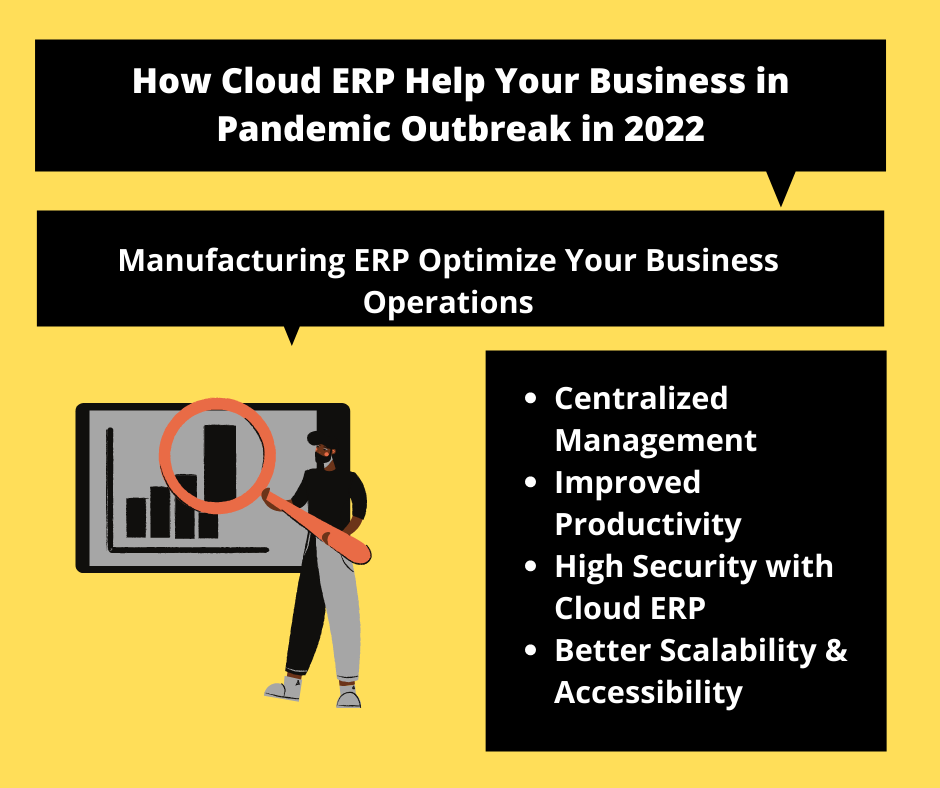
When the Cloud ERP Covid-19 pandemic came upon. It ushered in radical uncertainty and caused...

