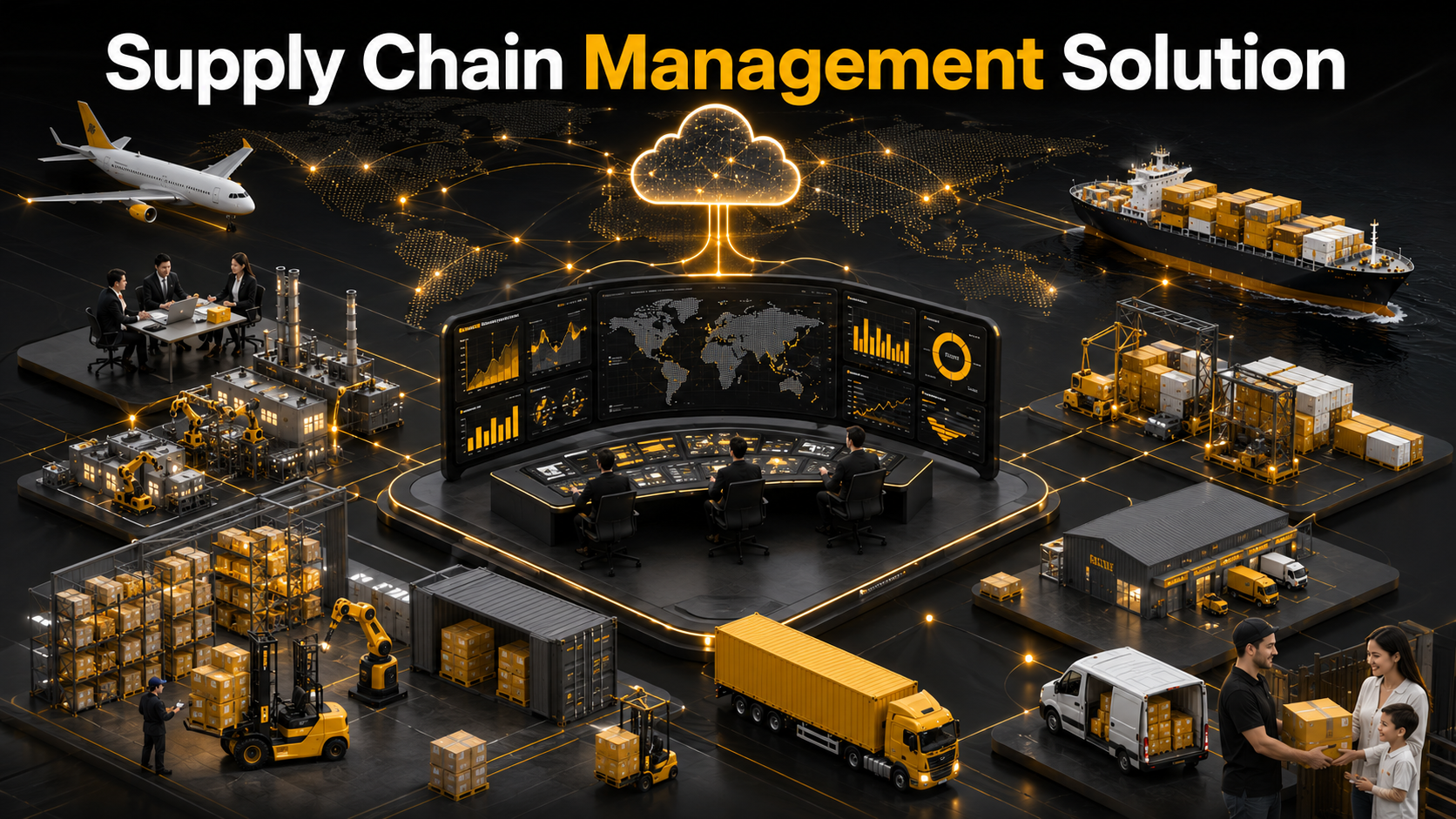

Complete Supply Chain Management solution connecting procurement, inventory, logistics, warehousing, and customer delivery.
Modern businesses operate in an increasingly competitive environment where speed, efficiency, and customer satisfaction determine long-term success. Every product passes through multiple stages before reaching the end customer, including sourcing raw materials, manufacturing, inventory management, transportation, warehousing, and distribution. Managing these activities manually can lead to delays, increased costs, and operational inefficiencies. This is why organizations of every size are investing in a reliable Supply Chain Management solution. A well-designed solution integrates every stage of the supply chain into a centralized platform, improving visibility, reducing waste, and helping businesses make faster, data-driven decisions. As digital transformation continues across industries, adopting an effective Supply Chain Management system has become essential for sustainable growth.
Before exploring its benefits, it is important to understand what Supply Chain Management actually means and why it plays a critical role in modern businesses.
Supply Chain Management (SCM) refers to the planning, coordination, and management of every activity involved in producing and delivering products or services. It begins with sourcing raw materials and continues through production, inventory management, warehousing, transportation, and final delivery to customers.
A modern Supply Chain Management solution connects all departments and stakeholders on a single platform, allowing businesses to monitor operations in real time and improve collaboration. Instead of relying on disconnected systems, organizations can make informed decisions using accurate and up-to-date information.
An efficient SCM system not only reduces operational costs but also improves customer satisfaction by ensuring products are delivered on time and inventory is always available when needed.
Key Points
Every business depends on a smooth supply chain to maintain productivity, profitability, and customer satisfaction.
Without proper Supply Chain Management, businesses often experience delayed deliveries, inventory shortages, poor communication with suppliers, and rising operational expenses. These issues directly affect customer trust and revenue.
A digital SCM solution helps organizations anticipate demand, optimize inventory, and improve coordination between suppliers, manufacturers, warehouses, and distributors. It also enables businesses to respond quickly to market changes and unexpected disruptions.
Companies using advanced Supply Chain Management practices often experience lower operating costs, improved order accuracy, and better decision-making because they have complete visibility across every stage of the supply chain.

Illustration showing the core operational stages of Supply Chain Management.
Every successful supply chain consists of several interconnected processes working together toward a common goal.
The foundation of Supply Chain Management includes procurement, production planning, inventory management, warehousing, transportation, distribution, and customer service. Each component plays an important role in ensuring products move efficiently from suppliers to customers.
Procurement focuses on sourcing quality materials from reliable vendors. Inventory management maintains optimal stock levels, while warehouse management improves storage and order fulfillment. Transportation ensures timely deliveries, and customer service handles post-delivery support and communication.
When these components operate through a centralized SCM platform, businesses gain greater control over their operations while minimizing delays and unnecessary costs.
Key Points
Modern SCM software offers advanced tools that simplify complex business operations.
Advanced features of SCM software
Today’s Supply Chain Management solutions include features such as real-time inventory tracking, automated procurement workflows, warehouse management, transportation planning, order processing, analytics dashboards, and demand forecasting.
Artificial intelligence and machine learning are increasingly being integrated into SCM platforms to improve forecasting accuracy and optimize logistics planning. Cloud-based systems also enable remote access, making collaboration easier across multiple business locations.
Advanced reporting tools provide managers with valuable insights into supplier performance, inventory turnover, transportation costs, and operational efficiency. These insights support smarter business decisions and continuous improvement.
Key Points
A well-implemented SCM solution delivers measurable improvements across multiple business functions.

Key benefits of implementing SCM solutions.
Businesses implementing Supply Chain Management solutions often notice immediate improvements in operational efficiency, cost savings, inventory accuracy, and customer satisfaction. Automation eliminates repetitive manual tasks while improving workflow consistency.
Real-time visibility allows managers to identify bottlenecks before they become major issues. Better forecasting minimizes excess inventory and reduces storage costs. Strong supplier collaboration also leads to improved procurement performance and shorter lead times.
Organizations become more agile and better prepared to adapt to market fluctuations, changing customer demands, and supply chain disruptions.
Key Points
Different businesses require different SCM solutions depending on their size, industry, and operational needs.
Cloud-based Supply Chain Management solutions are popular because they offer flexibility, lower implementation costs, automatic updates, and easy scalability. On-premise systems provide greater control over infrastructure and security, making them suitable for organizations with strict compliance requirements.
Hybrid solutions combine cloud and on-premise environments, allowing businesses to benefit from both deployment models. Industry-specific SCM platforms are also available for manufacturing, healthcare, retail, food processing, and logistics companies.
Selecting the right solution depends on business goals, budget, compliance requirements, and future growth plans.
Key Points
Nearly every industry depends on efficient supply chain operations to remain competitive.
Manufacturing companies use Supply Chain Management to coordinate production schedules and supplier relationships. Retail businesses depend on accurate inventory management to meet customer demand. Healthcare organizations require reliable SCM systems to ensure essential medicines and medical equipment remain available.
The food and beverage industry relies on SCM for inventory freshness and regulatory compliance, while eCommerce businesses use integrated logistics and warehouse management to fulfill orders quickly.
Technology-driven SCM platforms enable organizations across industries to improve efficiency while reducing operational risks.
Key Points
Successful implementation requires strategic planning, employee engagement, and the right technology partner.
Before implementing a Supply Chain Management solution, businesses should evaluate existing workflows, identify operational challenges, and define measurable objectives. Choosing software that integrates with existing ERP, CRM, accounting, and warehouse systems simplifies deployment and improves long-term efficiency.
Employee training is equally important because user adoption determines the overall success of the project. Continuous monitoring and regular performance reviews help organizations optimize processes after implementation.
Many businesses also partner with experienced technology providers that offer consulting, software implementation, system integration, cloud migration, analytics, and ongoing technical support. Working with a trusted partner ensures the solution aligns with business objectives without unnecessary complexity.
Key Points
A modern Supply Chain Management solution supports every stage of business operations, helping organizations improve efficiency while reducing costs.
Businesses use Supply Chain Management to streamline procurement, inventory planning, warehouse operations, transportation, and customer order fulfillment. Manufacturers rely on SCM to coordinate production schedules, while retailers use it to maintain optimal inventory levels. Logistics providers benefit from route optimization and shipment tracking, ensuring timely deliveries. Healthcare organizations depend on SCM for managing medical supplies, and eCommerce companies use integrated systems to process thousands of daily orders efficiently.
Organizations also leverage SCM software to improve collaboration with suppliers, reduce procurement delays, and monitor supply chain performance through real-time dashboards. These applications help companies remain competitive in dynamic markets.
Key Points

Emerging technologies are transforming Supply Chain Management into a smarter and more connected ecosystem.
Emerging technologies are reshaping Supply Chain Management, enabling businesses to become more agile, intelligent, and resilient.
Artificial Intelligence (AI) is improving demand forecasting, inventory optimization, and predictive maintenance. Machine Learning analyzes historical data to identify patterns that support better business decisions. The Internet of Things (IoT) enables real-time monitoring of vehicles, warehouses, and inventory through connected devices.
Blockchain technology is increasing transparency by providing secure and traceable transaction records across supplier networks. Automation and robotics are improving warehouse productivity, while cloud computing supports seamless collaboration across global operations.
Sustainability is another major trend. Businesses are increasingly adopting environmentally responsible sourcing practices, energy-efficient transportation, and waste reduction initiatives to meet customer expectations and regulatory requirements.
Key Points
Selecting the right Supply Chain Management platform requires careful evaluation of business requirements, scalability, and integration capabilities.
Every business has unique operational needs, so organizations should begin by identifying their current challenges and long-term goals. The chosen solution should integrate smoothly with existing ERP, CRM, accounting, and warehouse management systems.
Scalability is equally important because business requirements change over time. Cloud-based platforms often provide greater flexibility for growing organizations, while on-premise solutions may better suit businesses with strict compliance requirements.
Security features such as data encryption, user access controls, and regular backups should also be evaluated before implementation. In addition, businesses should assess the vendor’s experience, customer support, and implementation services to ensure long-term success.
Technology partners offering software development, system integration, cloud migration, analytics, and ongoing support can help organizations maximize the value of their Supply Chain Management investment without disrupting daily operations.
Key Points
Even with advanced technology, organizations must overcome several operational challenges to maintain an efficient supply chain.
Global supply chains are becoming increasingly complex due to changing customer expectations, geopolitical uncertainty, transportation disruptions, and fluctuating demand. Poor inventory visibility, supplier delays, inaccurate forecasting, and rising logistics costs continue to affect businesses across industries.
Implementing a digital Supply Chain Management solution helps organizations address many of these issues by providing real-time data, automated workflows, and predictive analytics. However, successful implementation also requires employee training, process standardization, and continuous performance monitoring.
Organizations that proactively identify supply chain risks and invest in technology are better prepared to respond to unexpected disruptions while maintaining customer satisfaction.
Key Points
A modern Supply Chain Management solution enables businesses to manage procurement, inventory, logistics, warehousing, and customer deliveries through a centralized platform. By improving visibility, automating workflows, and supporting data-driven decision-making, SCM helps organizations reduce costs while improving customer satisfaction. As technologies such as Artificial Intelligence, IoT, blockchain, and automation continue to evolve, investing in an advanced Supply Chain Management system becomes essential for sustainable business growth and long-term competitiveness.
Key Points
Businesses today operate in an increasingly connected and competitive marketplace where operational efficiency is a key driver of success. Implementing a reliable Supply Chain Management solution enables organizations to gain complete visibility across their supply chain while reducing costs, improving inventory accuracy, and delivering better customer experiences. Whether serving manufacturing, retail, healthcare, or logistics industries, modern SCM platforms help businesses respond quickly to changing market demands and future challenges. Organizations that embrace digital Supply Chain Management today will be better positioned to achieve sustainable growth, stronger supplier relationships, and long-term operational excellence.
Supply Chain Management is the process of planning, coordinating, and managing the flow of products, information, and resources from suppliers to customers. It ensures efficient production, inventory management, transportation, and order fulfillment.
It helps businesses reduce costs, improve operational efficiency, maintain optimal inventory levels, and deliver products to customers on time.
Manufacturing, retail, healthcare, logistics, food and beverage, automotive, pharmaceuticals, and eCommerce businesses all benefit from effective Supply Chain Management practices.
SCM software improves inventory visibility, automates workflows, enhances supplier collaboration, optimizes transportation, and provides valuable business insights through analytics.
Cloud-based solutions offer flexibility, automatic updates, and scalability, while on-premise systems provide greater infrastructure control and may suit businesses with strict regulatory requirements.

A profitable business does not merely depend on a good product but is significantly liable...

The ERP manufacturing companies are evolving and expanding at a rapid pace, thereby increasing competition...

In a short span of time, customer relationship management software has enormously advanced and picked...

Every year, we see the rise of new technologies., With each rising technology, we see...

The emerging economies are powering global growth. The world has witnessed the rise of manufacturing...

India is the world’s largest home to small and large-scale industries and a central hub...

The outbreaks of the Covid-19 virus caused worldwide panics and delivered a consequential blow to...
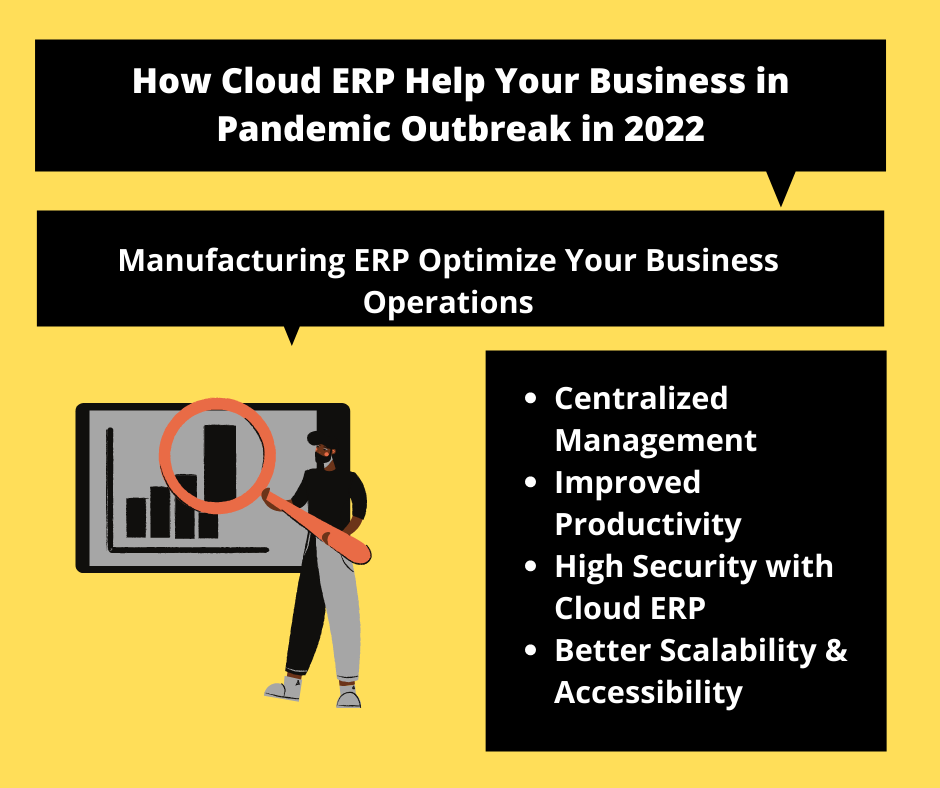
When the Cloud ERP Covid-19 pandemic came upon. It ushered in radical uncertainty and caused...

