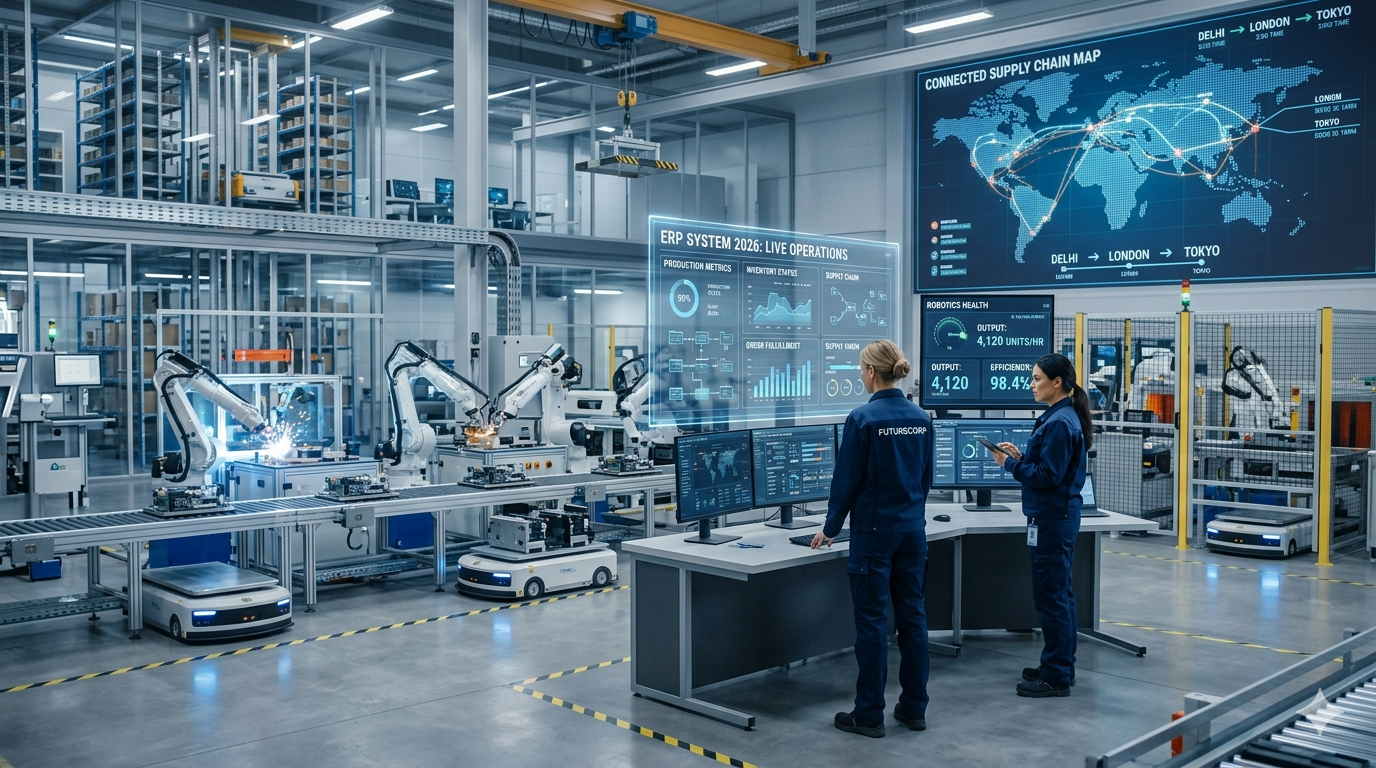
Modern ERP systems helping manufacturers automate operations and improve efficiency in 2026.
The manufacturing industry in 2026 is more competitive, automated, and data-driven than ever before. Businesses are under constant pressure to improve operational efficiency, reduce production costs, maintain product quality, and deliver faster to customers. To achieve these goals, manufacturers are increasingly adopting ERP software for manufacturing industry operations.
ERP, or Enterprise Resource Planning, is a centralized software system that helps manufacturing companies manage their business processes from a single platform. It connects departments such as production, inventory, procurement, supply chain, finance, human resources, quality control, and customer management into one integrated system.
In modern manufacturing environments, disconnected spreadsheets and manual workflows create delays, errors, inventory issues, and communication gaps. ERP software solves these problems by offering real-time visibility into every stage of manufacturing operations.
Whether you are a small manufacturing business, a mid-sized factory, or a large industrial enterprise, implementing the right ERP for manufacturing industry requirements can significantly improve productivity and profitability.
In this complete guide, you will learn everything about ERP software for manufacturing industry businesses, including features, benefits, implementation strategies, trends, challenges, and FAQs.
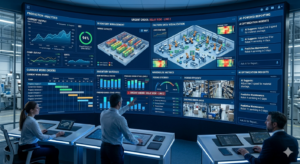
ERP dashboards provide real-time insights into manufacturing operations and inventory.
ERP software for manufacturing industry companies is a business management solution specifically designed to handle manufacturing workflows and operations. Unlike general ERP systems, manufacturing ERP software includes specialized tools for production planning, bill of materials management, shop floor control, inventory optimization, procurement tracking, and supply chain coordination.
Manufacturers often deal with complex production cycles, multiple suppliers, machine scheduling, quality assurance processes, and warehouse management. ERP systems streamline these activities into one unified platform.
The main objective of ERP software is to eliminate data silos and provide a single source of truth for the entire organization.
ERP systems help manufacturers create efficient production schedules based on demand forecasts, machine availability, workforce capacity, and raw material availability.
Manufacturing ERP software tracks inventory levels in real time and prevents overstocking or stock shortages.
ERP solutions help businesses manage suppliers, procurement processes, logistics, and warehouse operations efficiently.
ERP software automates accounting, budgeting, invoicing, payroll, taxation, and financial reporting.
Manufacturing ERP systems help businesses maintain product quality through inspections, testing workflows, and compliance monitoring.
Many ERP platforms integrate CRM functionality to manage customer orders, sales pipelines, and after-sales support.
Manufacturing businesses in 2026 are rapidly adopting automation, AI-driven production systems, IoT-enabled machinery, and predictive analytics. Traditional management methods are no longer sufficient to handle modern manufacturing complexity.
ERP systems have become essential because they improve visibility, coordination, and operational efficiency.
Manufacturers manage multiple departments, warehouses, suppliers, and production units. ERP software integrates everything into a single ecosystem.
Manufacturing leaders require instant access to accurate production and inventory data for better decision-making.
Customers expect faster delivery, better product quality, and transparent communication. ERP systems help manufacturers meet these expectations.
Manual processes slow down operations and increase errors. ERP software automates repetitive workflows and reduces dependency on manual data entry.
Manufacturing industries must comply with regulations related to quality, safety, taxation, and environmental standards. ERP systems help track and maintain compliance.
ERP systems reduce waste, improve resource utilization, and optimize production costs.
Selecting the right ERP system requires understanding the essential features manufacturers need.
Production management tools help manufacturers monitor and control production activities.
Inventory management is one of the most critical ERP functions for manufacturers.
ERP software helps manufacturers create and manage detailed bills of materials.
Supply chain modules improve supplier communication and procurement efficiency.
Quality control modules ensure consistent product standards.
Manufacturing ERP systems simplify financial operations.
Modern ERP software provides advanced reporting dashboards and analytics.
Manufacturers can choose from different ERP deployment models based on their business size and operational needs.
Cloud ERP systems are hosted online and accessed through the internet.
On-premise ERP software is installed on the company’s internal servers.
Hybrid ERP combines cloud and on-premise systems.
ERP software delivers long-term operational and financial benefits for manufacturers.
ERP systems automate routine tasks and eliminate duplicate work.
Manufacturers can reduce excess inventory and avoid stock shortages.
ERP software improves scheduling and resource allocation.
Real-time dashboards provide accurate business insights.
Businesses can optimize raw material usage and reduce operational waste.
ERP systems enable faster order processing and timely delivery.
Departments can communicate more effectively through centralized data.
ERP systems support business growth and expansion.
Although ERP systems offer many benefits, implementation can be challenging if not managed properly.
ERP implementation may require significant investment in software, hardware, training, and customization.
Employees may resist changing traditional workflows.
Migrating old data into a new ERP system can be time-consuming.
ERP systems must integrate with existing machines, software, and processes.
Staff training is essential for successful ERP adoption.
Excessive customization may increase implementation complexity and maintenance costs.
Selecting the right ERP system requires careful planning and evaluation.
Identify operational challenges and define ERP objectives.
Choose ERP software designed specifically for manufacturing operations.
Ensure the ERP system can support future business growth.
Decide whether cloud, on-premise, or hybrid ERP is best for your organization.
The ERP should integrate with existing software and machinery.
Reliable customer support and training services are essential.
A user-friendly interface improves adoption and productivity.
Evaluate implementation, licensing, maintenance, and upgrade costs.
A successful ERP implementation requires strategic planning.
Identify operational challenges, business goals, and ERP expectations.
Research and compare ERP vendors based on features and industry expertise.
Create implementation timelines, budgets, and team responsibilities.
Configure ERP modules according to manufacturing workflows.
Transfer existing business data into the ERP system.
Train staff on ERP workflows and system usage.
Test the ERP system before full deployment.
Launch the ERP system and monitor performance.
ERP technology continues to evolve rapidly in the manufacturing sector.
Artificial intelligence helps automate forecasting, predictive maintenance, and production planning.
ERP systems connect with smart manufacturing equipment for real-time monitoring.
Advanced analytics help manufacturers forecast demand and reduce downtime.
Mobile ERP access improves operational flexibility and remote management.
Cloud adoption continues to grow because of scalability and lower infrastructure costs.
Modern ERP systems include stronger security measures to protect manufacturing data.
ERP platforms help businesses track sustainability metrics and energy usage.
ERP systems are used across multiple manufacturing sectors.
ERP software helps manage production scheduling, inventory, and supplier coordination.
Manufacturers use ERP systems for component tracking and quality control.
ERP solutions support compliance, batch tracking, and inventory management.
ERP software helps manage strict regulatory compliance and quality assurance.
ERP systems streamline supply chain and production management.
ERP platforms support formula management and safety compliance.
Many ERP projects fail because of poor planning and unrealistic expectations.
Not all ERP systems are suitable for manufacturing businesses.
Lack of training reduces ERP adoption success.
Inaccurate data migration can create operational issues.
ERP projects require strong leadership support.
Too much customization increases complexity and costs.
ERP implementation requires sufficient time and planning.
The future of ERP in manufacturing is centered around automation, intelligence, and connectivity.
Manufacturing companies are increasingly adopting smart factories powered by AI, machine learning, robotics, and IoT technologies. ERP systems are evolving into intelligent business ecosystems capable of predictive decision-making and autonomous operations.
Future ERP platforms will provide:
As manufacturing becomes more digital, ERP software will remain a critical technology for operational excellence.
ERP software for manufacturing industry businesses has become essential in 2026. Manufacturers need integrated systems that improve efficiency, automate operations, reduce costs, and provide real-time business visibility.
From production management and inventory tracking to financial reporting and quality control, ERP systems help manufacturers streamline every aspect of their operations.
Choosing the right ERP for manufacturing industry requirements depends on business size, operational complexity, scalability needs, and budget. With proper implementation and employee training, ERP software can transform manufacturing operations and drive long-term growth.
Businesses that invest in modern ERP solutions today will be better prepared for the future of smart manufacturing.

A profitable business does not merely depend on a good product but is significantly liable...

The ERP manufacturing companies are evolving and expanding at a rapid pace, thereby increasing competition...

In a short span of time, customer relationship management software has enormously advanced and picked...

Every year, we see the rise of new technologies., With each rising technology, we see...

The emerging economies are powering global growth. The world has witnessed the rise of manufacturing...

India is the world’s largest home to small and large-scale industries and a central hub...
The outbreaks of the Covid-19 virus caused worldwide panics and delivered a consequential blow to...
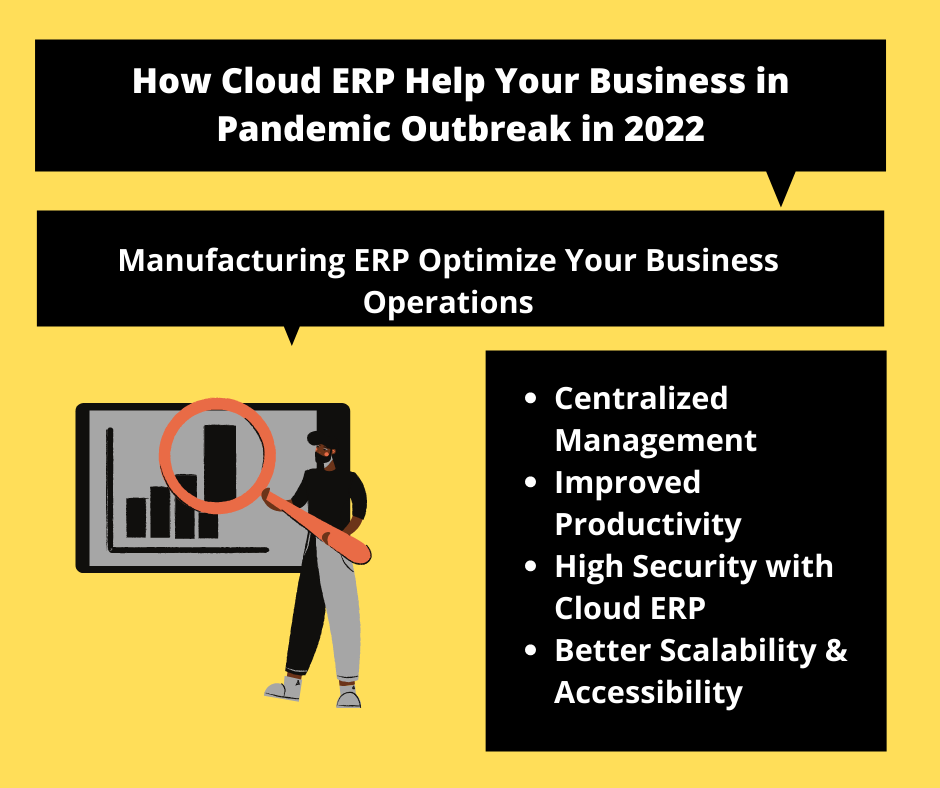
When the Cloud ERP Covid-19 pandemic came upon. It ushered in radical uncertainty and caused...

