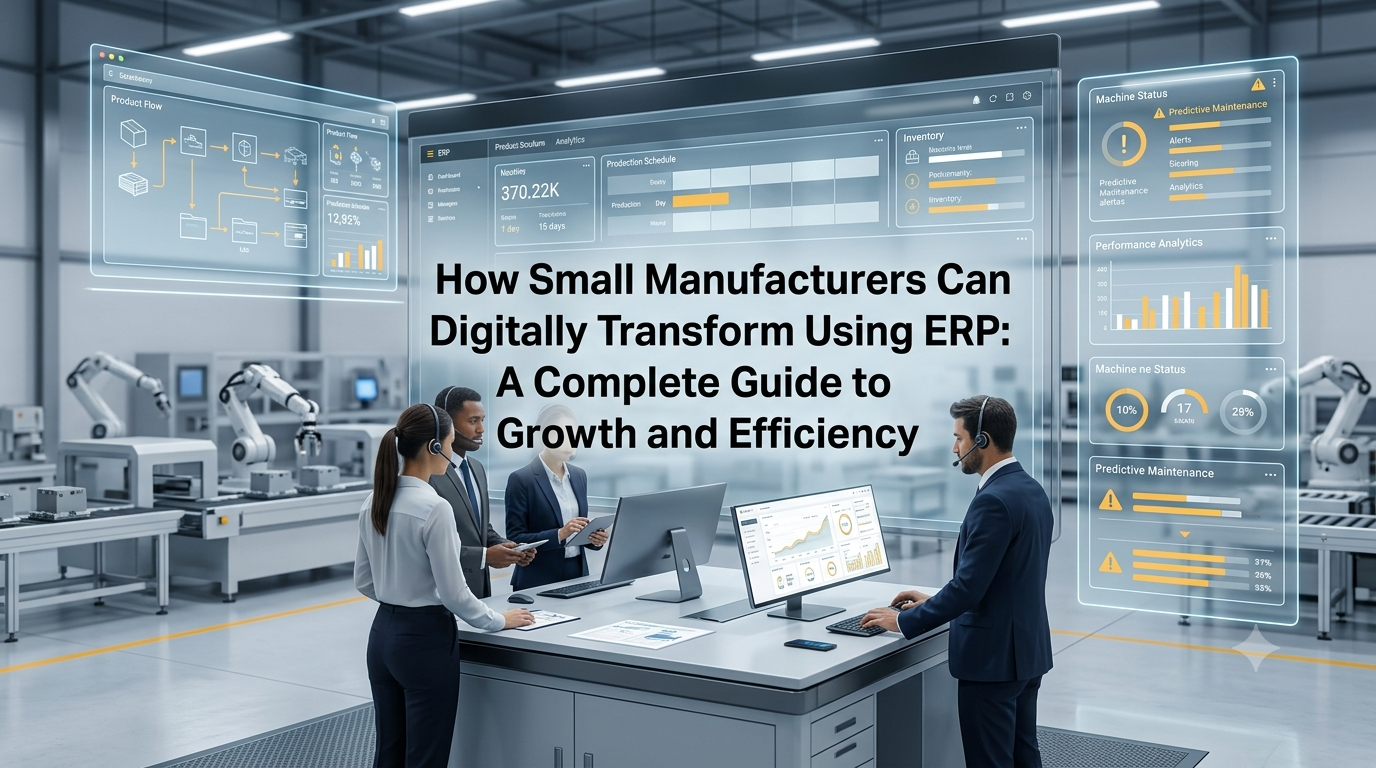
Small manufacturing businesses face growing pressure to improve efficiency, reduce costs, and respond quickly to changing customer demands. Traditional spreadsheets, disconnected software, and manual processes often create operational bottlenecks that limit growth. This is where erp for small business manufacturing becomes a critical business tool.
A modern digital transformation ERP platform helps manufacturers integrate production, inventory, purchasing, finance, sales, and customer management into one centralized system. By connecting departments and automating workflows, businesses gain real-time visibility and better decision-making capabilities.
As manufacturing becomes increasingly competitive, ERP technology is no longer reserved for large enterprises. Affordable cloud-based solutions now enable small manufacturers to embrace digital transformation and compete effectively in modern markets.
Digital transformation connects every manufacturing function through a unified ERP platform.
Digital transformation refers to the integration of digital technologies into everyday business operations to improve efficiency, productivity, and customer satisfaction. For manufacturers, this means replacing disconnected processes with integrated systems that provide accurate and real-time information.
The adoption of digital transformation ERP solutions allows manufacturers to move beyond reactive decision-making. Instead of relying on outdated reports, leaders can access live production data, inventory levels, procurement status, and financial performance from a single dashboard.
Key points:
Digital transformation is not simply about technology adoption. It involves redesigning processes to create a more agile and efficient manufacturing environment.
Many small manufacturers continue to manage operations through spreadsheets and separate software tools. While this approach may work initially, it becomes increasingly difficult as business complexity grows.
An effective erp for small business manufacturing provides a unified platform that connects every operational area. Production teams gain accurate inventory data, finance teams receive real-time transaction updates, and management gains complete visibility into business performance.
Without ERP, businesses often face challenges such as inventory inaccuracies, delayed production schedules, inefficient purchasing, and limited reporting capabilities. These issues can directly impact profitability and customer satisfaction.
Modern ERP systems help manufacturers streamline operations while creating a foundation for future digital initiatives such as automation, predictive analytics, and smart manufacturing practices.
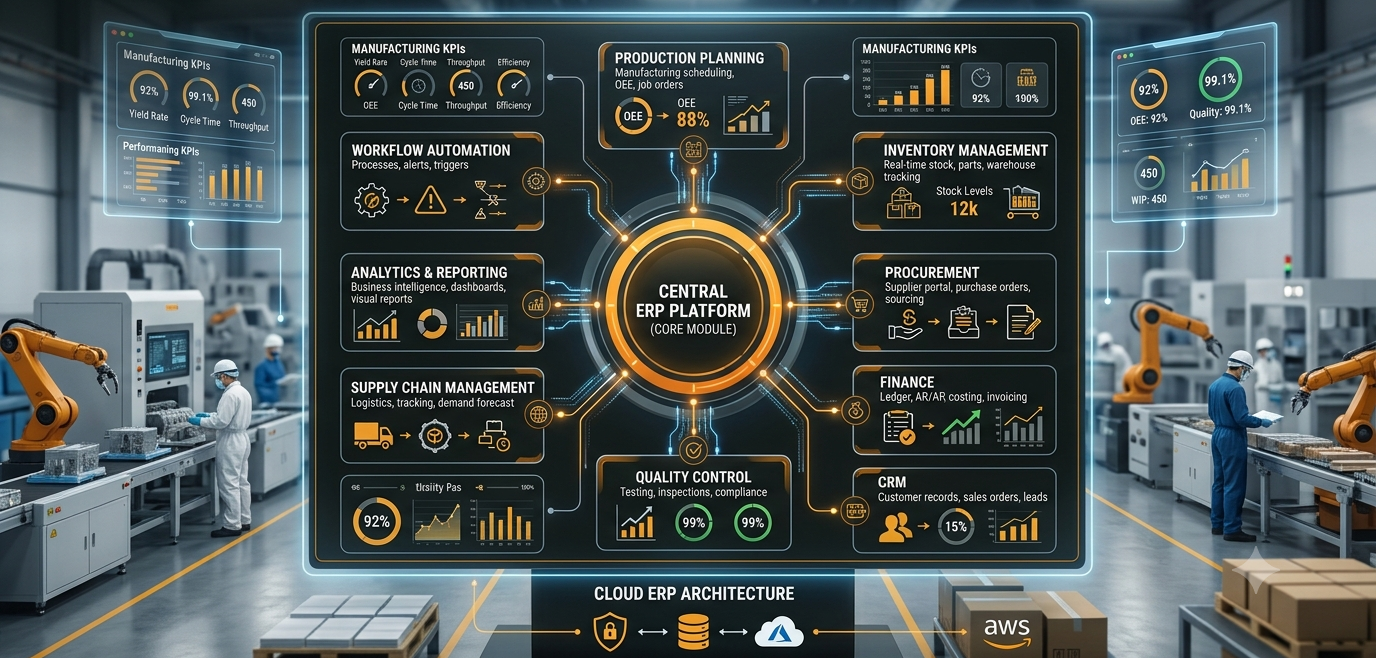
ERP centralizes business functions to eliminate silos and improve operational efficiency.
ERP systems provide multiple capabilities that directly support manufacturing modernization. Each module contributes to greater operational efficiency and improved data accuracy.
Production planning modules help businesses schedule resources effectively and monitor manufacturing progress in real time. Inventory management capabilities ensure raw materials and finished goods remain at optimal levels.
Financial management features provide complete visibility into cash flow, expenses, and profitability. Customer relationship management tools improve sales tracking and customer service performance.
Key points:
When these functions operate within one platform, manufacturers eliminate information silos and improve cross-department collaboration.

ERP improves productivity, profitability, inventory accuracy, and customer satisfaction.
The benefits of implementing erp for small business manufacturing extend beyond operational efficiency. ERP systems help organizations create a data-driven culture that supports long-term growth.
One major advantage is improved visibility. Decision-makers can access real-time information regarding inventory, production status, sales orders, and financial performance. This transparency enables faster responses to market changes and operational issues.
ERP systems also reduce manual work through automation. Repetitive tasks such as purchase order creation, invoicing, and inventory updates can be handled automatically, allowing employees to focus on higher-value activities.
Key points:
These advantages contribute directly to improved profitability and competitiveness.
Inventory management is one of the most critical areas for manufacturers. Excess inventory increases carrying costs, while shortages can delay production and customer deliveries.
A modern digital transformation ERP solution provides real-time inventory tracking across warehouses and production facilities. Businesses gain visibility into stock levels, reorder points, supplier performance, and material consumption patterns.
ERP systems also strengthen supply chain operations by connecting procurement, inventory, and production planning processes. This integration helps manufacturers maintain optimal inventory levels while minimizing disruptions.
Key points:
With accurate inventory data, manufacturers can improve production continuity and customer satisfaction.
ERP implementation requires careful planning and organizational commitment. Successful projects begin with clearly defined business objectives and process assessments.
Manufacturers should first identify operational challenges and determine how ERP functionality can address those issues. Selecting a solution that aligns with business size, budget, and future growth plans is equally important.
Employee training plays a critical role in adoption. Team members must understand how the new system supports daily operations and contributes to business goals.
Key points:
A structured implementation approach significantly increases the likelihood of ERP success.
Not all ERP systems are designed specifically for manufacturing environments. Small manufacturers should prioritize solutions that offer industry-specific functionality and scalability.
Cloud ERP platforms have become particularly attractive because they reduce infrastructure costs and simplify maintenance requirements. They also provide remote access, automatic updates, and enhanced flexibility.
Organizations evaluating ERP software should consider integration capabilities, reporting features, implementation support, and total cost of ownership. Choosing a vendor with manufacturing expertise can further improve project outcomes.
Key points:
The right ERP platform becomes the foundation for sustainable digital transformation and business growth.
Common Challenges During ERP Digital Transformation
Implementing digital transformation ERP initiatives can bring significant benefits, but manufacturers often encounter challenges during adoption. Resistance to change, poor data quality, limited budgets, and inadequate training are among the most common obstacles. Small manufacturers frequently underestimate the effort required to redesign business processes and align teams around new workflows.
A successful ERP project requires leadership commitment, realistic expectations, and strong communication across departments. Organizations that proactively address implementation challenges are more likely to achieve long-term value from their ERP investment.
Key Points
Cloud technology has transformed how manufacturers access and deploy ERP solutions. Unlike traditional on-premise systems, cloud ERP platforms offer greater flexibility, lower upfront costs, and faster implementation timelines. This makes them especially attractive for businesses seeking erp for small business manufacturing solutions.
Cloud-based ERP systems allow users to access information from any location while ensuring data remains synchronized across departments. Software updates, security enhancements, and infrastructure maintenance are typically handled by the vendor, reducing internal IT requirements.
Key Points
Manufacturers adopting cloud ERP can accelerate digital transformation while maintaining operational agility and reducing technology management burdens.
Automation is one of the most valuable outcomes of a successful digital transformation ERP strategy. Manual tasks consume significant employee time and increase the likelihood of errors. ERP systems automate routine processes across production, procurement, inventory, finance, and customer management.
For example, inventory levels can automatically trigger purchase orders when stock reaches predefined thresholds. Financial transactions can be recorded instantly, while production schedules update automatically based on demand forecasts and material availability.
Key Points
Business process automation helps manufacturers improve efficiency while allowing employees to focus on strategic and value-generating activities.
To maximize ERP value, manufacturers should establish performance metrics before implementation begins. Measuring outcomes helps determine whether the system is delivering expected benefits and identifies opportunities for further optimization.
Common performance indicators include inventory turnover, production efficiency, order fulfillment rates, operating costs, customer satisfaction, and profitability. Tracking these metrics over time provides a clear picture of ERP effectiveness.
A well-implemented erp for small business manufacturing solution often generates measurable improvements within the first year through cost reduction, productivity gains, and improved operational visibility.
Key Points
Organizations that continuously evaluate ERP performance are better positioned to refine processes and achieve sustainable growth.
The future of manufacturing ERP is increasingly connected to advanced technologies such as artificial intelligence, machine learning, predictive analytics, and Industrial Internet of Things (IIoT) devices. These innovations help manufacturers gain deeper insights and improve operational performance.
Modern ERP systems are evolving from transactional platforms into intelligent business management solutions. Predictive maintenance, automated demand forecasting, and real-time production monitoring are becoming more accessible to small manufacturers.
As technology continues to advance, businesses that embrace digital transformation ERP strategies will be better equipped to compete in fast-changing markets and respond quickly to customer demands.
Key Points
The manufacturers that adopt these technologies early will gain significant competitive advantages in efficiency and innovation.
Digital transformation is no longer optional for small manufacturers seeking long-term growth and competitiveness. A modern erp for small business manufacturing solution provides the foundation needed to integrate operations, improve visibility, automate processes, and support informed decision-making.
ERP systems connect production, inventory, finance, procurement, and customer management within a single platform. This integration helps eliminate inefficiencies while creating a scalable framework for future technological advancements. Whether implemented on-premise or in the cloud, ERP remains one of the most impactful investments manufacturers can make.
Key Points
ERP creates the foundation for sustainable manufacturing growth and innovation.
Small manufacturers face increasing pressure to operate efficiently, meet customer expectations, and adapt to evolving market demands. Investing in erp for small business manufacturing enables organizations to modernize operations and establish a strong foundation for sustainable growth. Through effective digital transformation ERP initiatives, businesses can improve productivity, reduce operational complexity, and gain the visibility needed to make smarter strategic decisions.
As manufacturing technology continues to evolve, ERP systems will remain at the center of digital innovation. Organizations that embrace ERP-driven transformation today will be better positioned to navigate future challenges, capitalize on new opportunities, and maintain a competitive advantage in the manufacturing industry.
ERP for small business manufacturing is software that integrates key business functions such as production, inventory management, purchasing, finance, sales, and customer management into a single centralized system. It helps manufacturers improve efficiency, reduce manual work, and gain real-time visibility across operations.
A digital transformation ERP solution connects business processes, automates workflows, and provides real-time data access. This enables manufacturers to make faster decisions, improve productivity, and create a more agile and competitive operation.
Small manufacturers often struggle with disconnected systems, spreadsheets, and manual processes. ERP software helps eliminate these challenges by streamlining operations, improving data accuracy, reducing costs, and supporting business growth.
ERP offers several benefits, including improved inventory control, better production planning, enhanced reporting, increased productivity, reduced operational costs, stronger compliance, and improved customer service.
ERP systems provide real-time inventory visibility, automated stock tracking, demand forecasting, and replenishment planning. This helps manufacturers avoid stockouts, reduce excess inventory, and improve supply chain efficiency.

A profitable business does not merely depend on a good product but is significantly liable...

The ERP manufacturing companies are evolving and expanding at a rapid pace, thereby increasing competition...

In a short span of time, customer relationship management software has enormously advanced and picked...

Every year, we see the rise of new technologies., With each rising technology, we see...

The emerging economies are powering global growth. The world has witnessed the rise of manufacturing...

India is the world’s largest home to small and large-scale industries and a central hub...
The outbreaks of the Covid-19 virus caused worldwide panics and delivered a consequential blow to...
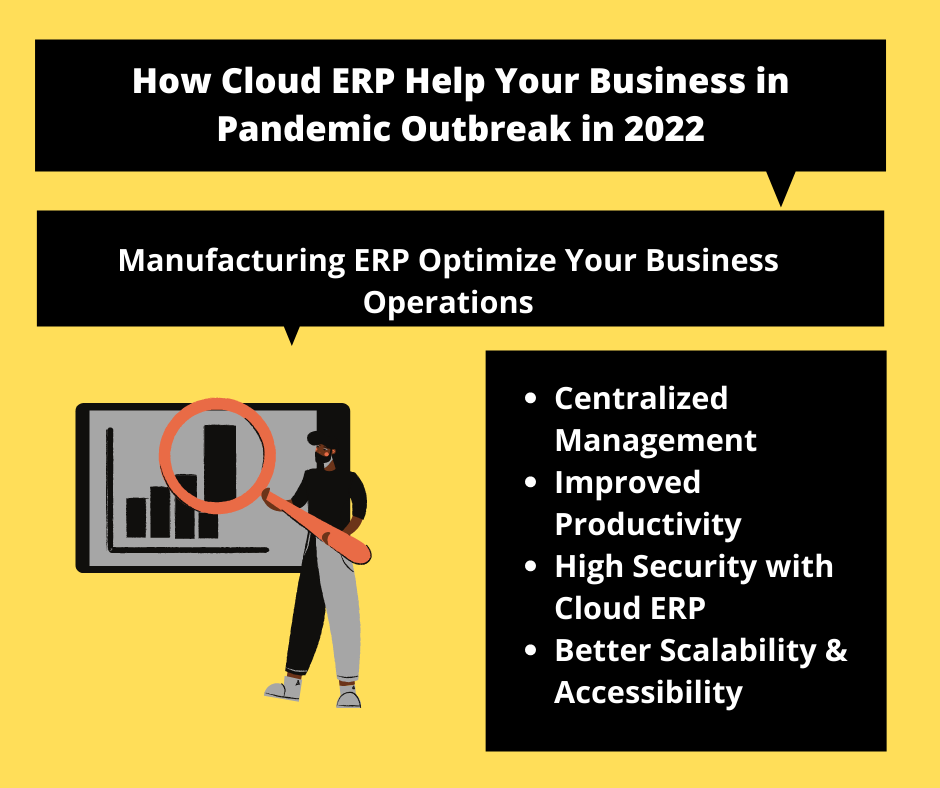
When the Cloud ERP Covid-19 pandemic came upon. It ushered in radical uncertainty and caused...

