
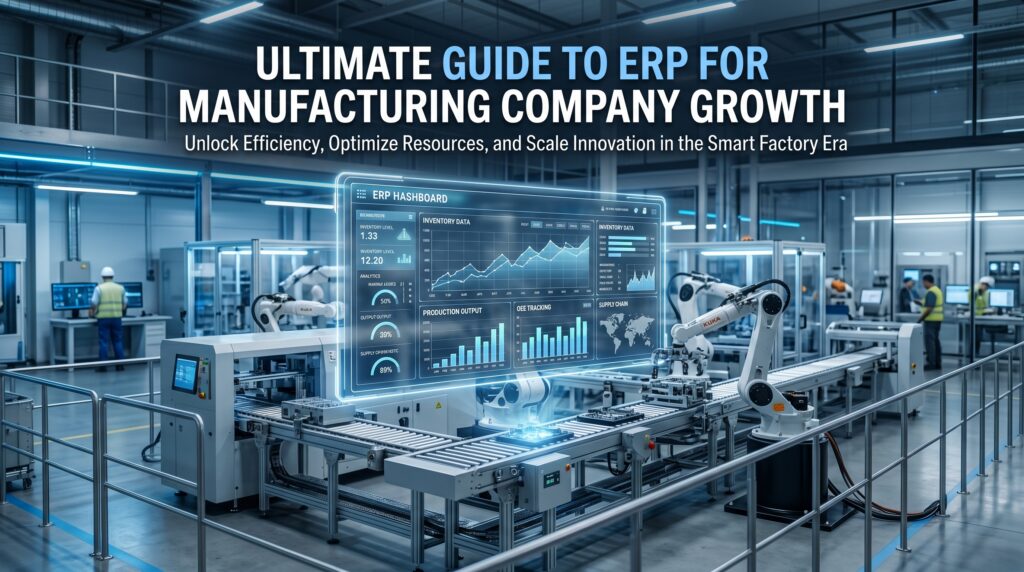
Smart ERP for Manufacturing optimizing production, inventory, and operations in manufacturing
In the modern industrial landscape, the difference between a thriving factory and a struggling one often comes down to a single factor: visibility. To scale, a manufacturing company needs to go beyond fragmented spreadsheets and disconnected departments. This is where a specific ERP for manufacturing company becomes the backbone of the business.
At Autus Cyber Tech, we understand that manufacturing is a high-stakes environment where a 1% increase in efficiency can result in millions in saved revenue. Our goal is to provide a comprehensive digital ecosystem that doesn’t just “track” your business but actively optimizes it.
Enterprise Resource Planning (ERP) is often misunderstood as just an accounting tool. In practice, in the case of the manufacturing industry, it is a central nervous system. It incorporates all aspects of the operation, including the purchase of a raw material to the ultimate delivery of a finished product.
Silos breaking down is the main goal of an ERP in the manufacturing industry. When your sales team receives an order, the shop floor should be aware immediately of the production requirement, and the procurement team should know whether more raw materials are required. This communication occurs through email, phone calls, or paper trails without an integrated system, which inevitably results in human error and delays.
In order to really change a business, an ERP should take into account the particularities of production. The following are the pillars that Autus Cyber Tech concentrates on to make sure that your manufacturing unit is functioning at its optimum level:
The capability to look ahead is the heart of any manufacturing ERP. Production planning is not merely knowing what to produce today, but rather it is about optimizing machine utilization and labor shifts in the coming month.
Inventory is nothing more than frozen cash. When you have too much, your capital is tied up; when you have too little, your production lines come to a halt.
The BOM is the secret of success in manufacturing. Even a small mistake in a BOM can result in a whole batch of wasted products.
A generic ERP may be able to handle your payroll, but a specialized ERP to a manufacturing company needs to get down into the dirt and grease of the factory floor.
This module fills the gap between the office and the machines. Using digital Work Centers, supervisors are able to monitor the status of each job in real-time.
Quality is not an afterthought; it is a prerequisite. Our ERP integrates quality checks directly into the production workflow.
MRP is the engine that calculates the “What, How Much, and When” of your materials. It looks at the production schedule and cross-references it with current inventory and open purchase orders.
One of the biggest leaks in manufacturing profitability is hidden costs. When your production data is separate from your accounting data, you never truly know your margins until the end of the quarter.
Autus Cyber Tech’s integrated approach ensures:
For growing enterprises, the challenge often lies in managing diversity—different plants, different tax laws, and different languages. A robust ERP for manufacturing industry must be built for scale.
Manufacturing is nothing without its people. However, managing specialized labor requires more than just a payroll system.
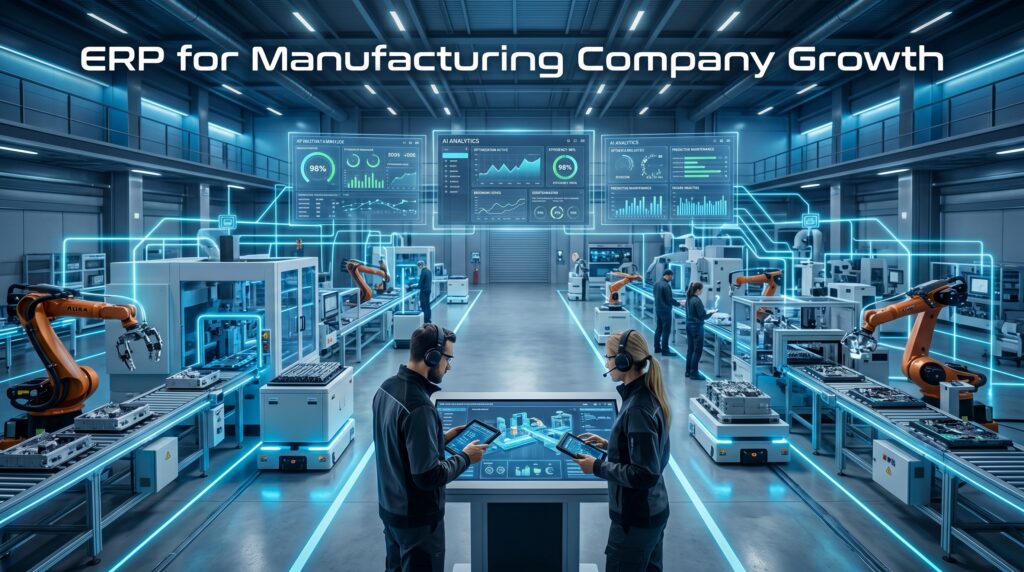
Connected machines and ERP system driving smart manufacturing
The manufacturing sector is currently undergoing a “Fourth Industrial Revolution.” At Autus Cyber Tech, we don’t just provide software; we provide a bridge to the future.
The market is flooded with software providers, but manufacturing is a specialized field that requires a partner, not just a vendor.
Implementing an ERP for manufacturing company is the fastest way to achieve “Lean” operations. By eliminating waste—whether it’s wasted time, wasted material, or wasted movement—you directly impact your bottom line.
Waste Reduction Strategies enabled by our ERP:
Across the globe, companies using Autus Cyber Tech solutions have seen dramatic improvements:
In an era of global competition and shrinking margins, “business as usual” is no longer enough. To survive and thrive, your manufacturing company needs the agility, transparency, and intelligence that only a world-class ERP can provide.
Autus Cyber Tech is more than just an ERP software company; we are your partners in digital transformation. We empower you to take control of your production, delight your customers with on-time deliveries, and build a sustainable, profitable future.
Don’t let your data stay in silos. Unlock the full potential of your factory today.
Q: How long does it take to implement a manufacturing ERP? A: Implementation varies based on the size of the company, but typically ranges from 3 to 9 months. Our team uses an agile methodology to ensure you see value as quickly as possible.
Q: Can the ERP integrate with my existing machinery? A: Yes, through IoT gateways and specialized APIs, we can connect with modern CNC machines, PLCs, and other industrial hardware to pull real-time production data.
Q: Is my data secure in the cloud? A: Absolutely. We use enterprise-grade encryption and multi-factor authentication, providing higher security standards than most on-premise servers can offer.
Q: Does Autus Cyber Tech support customized reporting? A: Every business has unique KPIs. Our ERP includes a powerful reporting engine that allows you to build custom dashboards and automated reports tailored to your specific goals.

A profitable business does not merely depend on a good product but is significantly liable...

The ERP manufacturing companies are evolving and expanding at a rapid pace, thereby increasing competition...

In a short span of time, customer relationship management software has enormously advanced and picked...

Every year, we see the rise of new technologies., With each rising technology, we see...

The emerging economies are powering global growth. The world has witnessed the rise of manufacturing...

India is the world’s largest home to small and large-scale industries and a central hub...
The outbreaks of the Covid-19 virus caused worldwide panics and delivered a consequential blow to...
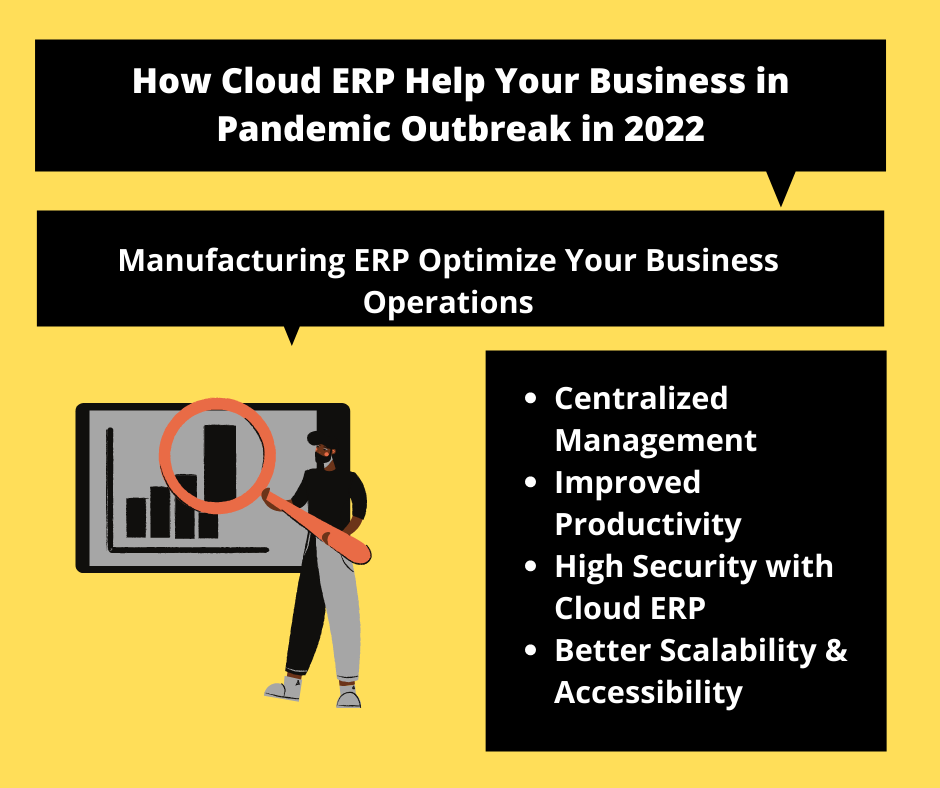
When the Cloud ERP Covid-19 pandemic came upon. It ushered in radical uncertainty and caused...

